
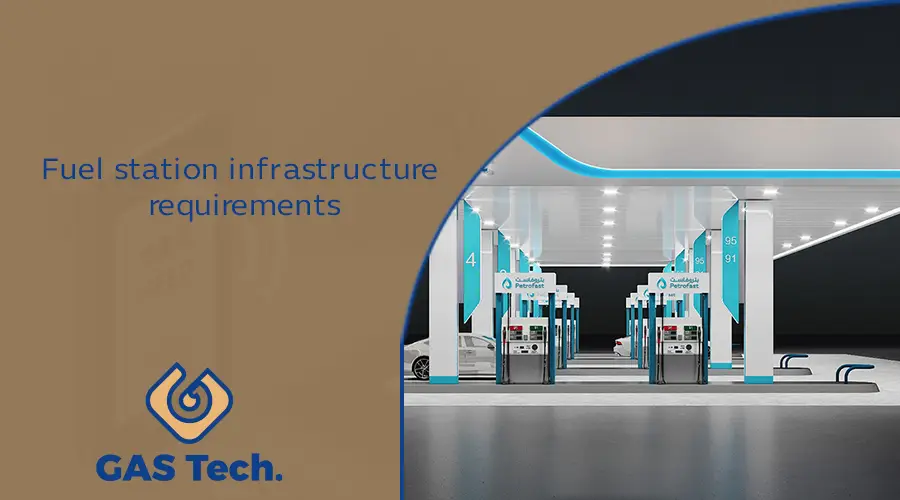
Fuel station regulations in Saudi Arabia have become significantly stricter in recent years. This shift is driven by three main priorities: enhancing public safety, accelerating the digital transformation of the fuel sector, and ensuring that stations meet the licensing standards required for long-term investment and operation.
Today, a station is no longer judged only by fuel quality or location—it must also comply with environmental protection rules, digital monitoring systems, automation requirements, and strict urban planning standards. Any station that fails to adapt risks penalties, closure, or loss of commercial value.
In this article, we break down all the key Fuel station infrastructure requirements and compliance rules set by official Saudi authorities, so station owners can clearly understand what is mandatory, what is optional, and where digital solutions fit in.
What Are Fuel Station Infrastructure Requirements in Saudi Arabia?
Fuel station infrastructure requirements must comply with a set of technical, safety, and automation regulations defined by several official bodies, including the Ministry of Energy, Municipalities, Civil Defense, and the Ministry of Transport. These Saudi fuel station standards have evolved significantly, especially with the national shift toward digital transformation and real-time fuel monitoring.
Old vs. New Stations: What Changed?
Older fuel stations used to rely on manual operations, standalone POS systems, and non-digital fuel tracking. New compliant stations, however, are required to operate through fully integrated electronic and automated systems that provide real-time control over pumps, tanks, pricing, transactions, and fuel logistics.
Key Automation & Digital Compliance Requirements
Below are examples of mandatory Fuel station infrastructure requirements defined by the Ministry of Energy:
Mandatory Fuel station infrastructure standards Saudi Arabia
-
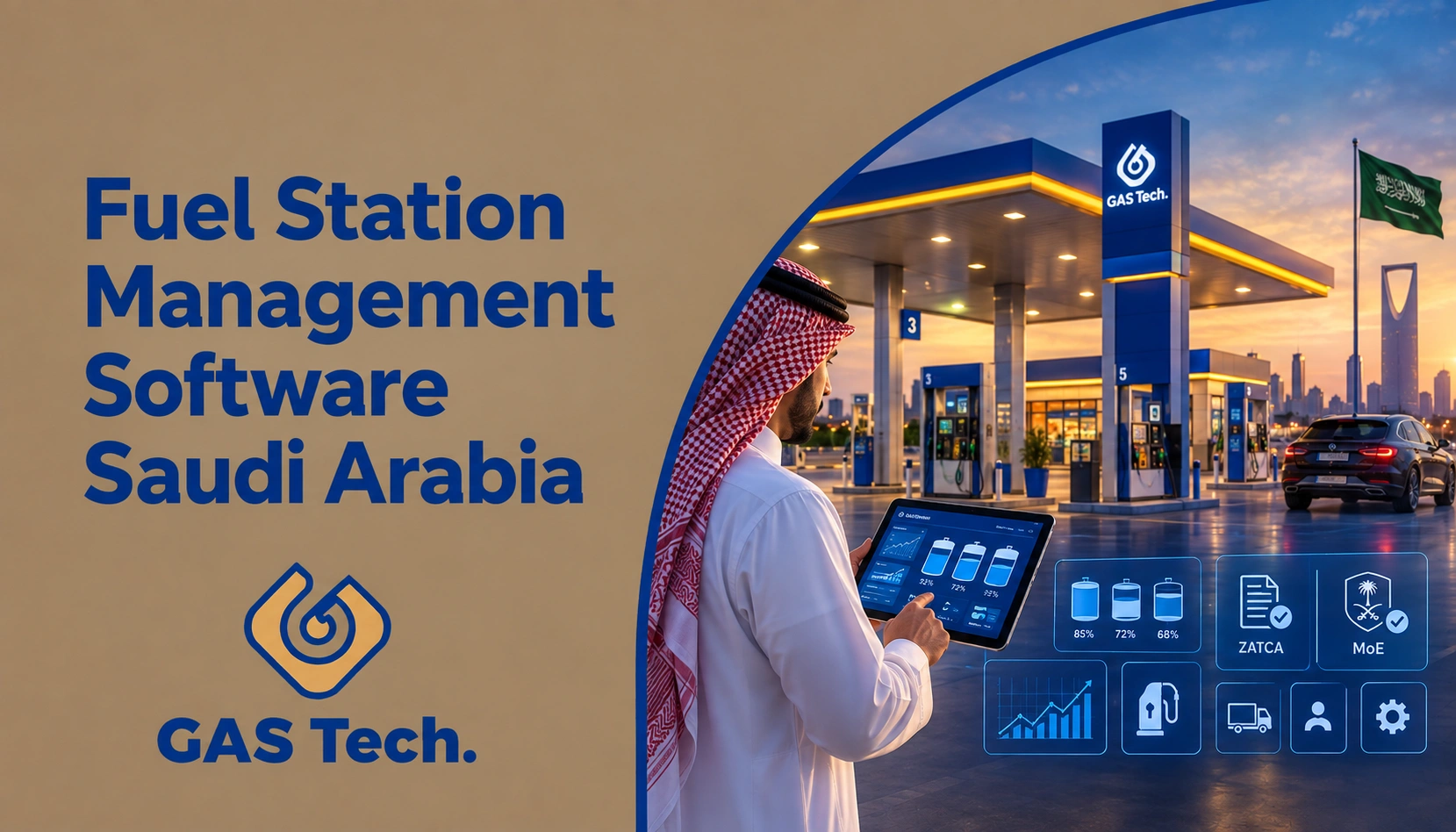
- Central electronic control system that connects pumps, tracks fuel quantities, and allows remote price updates instantly.
- Unified central connectivity with all required government systems, including automatic price adjustments on pumps and display screens.
- Automatic Tank Gauge (ATG) system for real-time fuel level monitoring and leak detection.
- Transportation Management System (TMS) to track fuel delivery from supplier to station tanks, ensuring full supply chain visibility.
Recommended Fuel station infrastructure standards Saudi Arabia
-
- ERP system covering HR, accounting, inventory, POS, and retail operations, connected automatically to pumps and tank sensors.
- Cloud-based connectivity between all automation devices and software.
- Accurate fuel measurement standards and annual calibration of tank sensors.
How GasTech Helps Stations Meet Fuel station infrastructure requirements
GasTech’s automation and ERP ecosystem is built specifically to comply with all Ministry of Energy and ZATCA Saudi fuel station standards, including:
- Full pump and tank automation
- Cloud-based centralized control
- Real-time pricing and e-invoicing
- ATG fuel level monitoring
- Transport and delivery tracking
- Complete ERP integration for fuel and non-fuel business
In other words, GasTech enables station owners to upgrade from manual to fully compliant smart stations—without dealing with multiple vendors.
Fuel Station Licensing Regulations Saudi Arabia
Operating a fuel station in Saudi Arabia requires strict compliance with licensing regulations set by multiple government authorities. The process is not only administrative—it also involves safety reviews, environmental checks, and digital compliance requirements.
Key Fuel Station Licensing Regulations Saudi Arabia:
- Choose the Legal Entity: Most investors register as an LLC to protect personal liability and facilitate partnerships.
- Reserve the Commercial Name: The name must be approved and registered through the Ministry of Commerce.
- Secure an Approved Location: The land must be in a zone authorized for petrol station activity and meet road, access, and safety standards.
- Obtain Core Permits and Approvals
These usually include:- Commercial Registration (CR)
- Municipality permit
- Civil Defense safety approval
- Environmental clearance
- Construction license
- Apply for the Official Fuel Station License: This is the main operating license and is issued only after the site and documents meet all criteria.
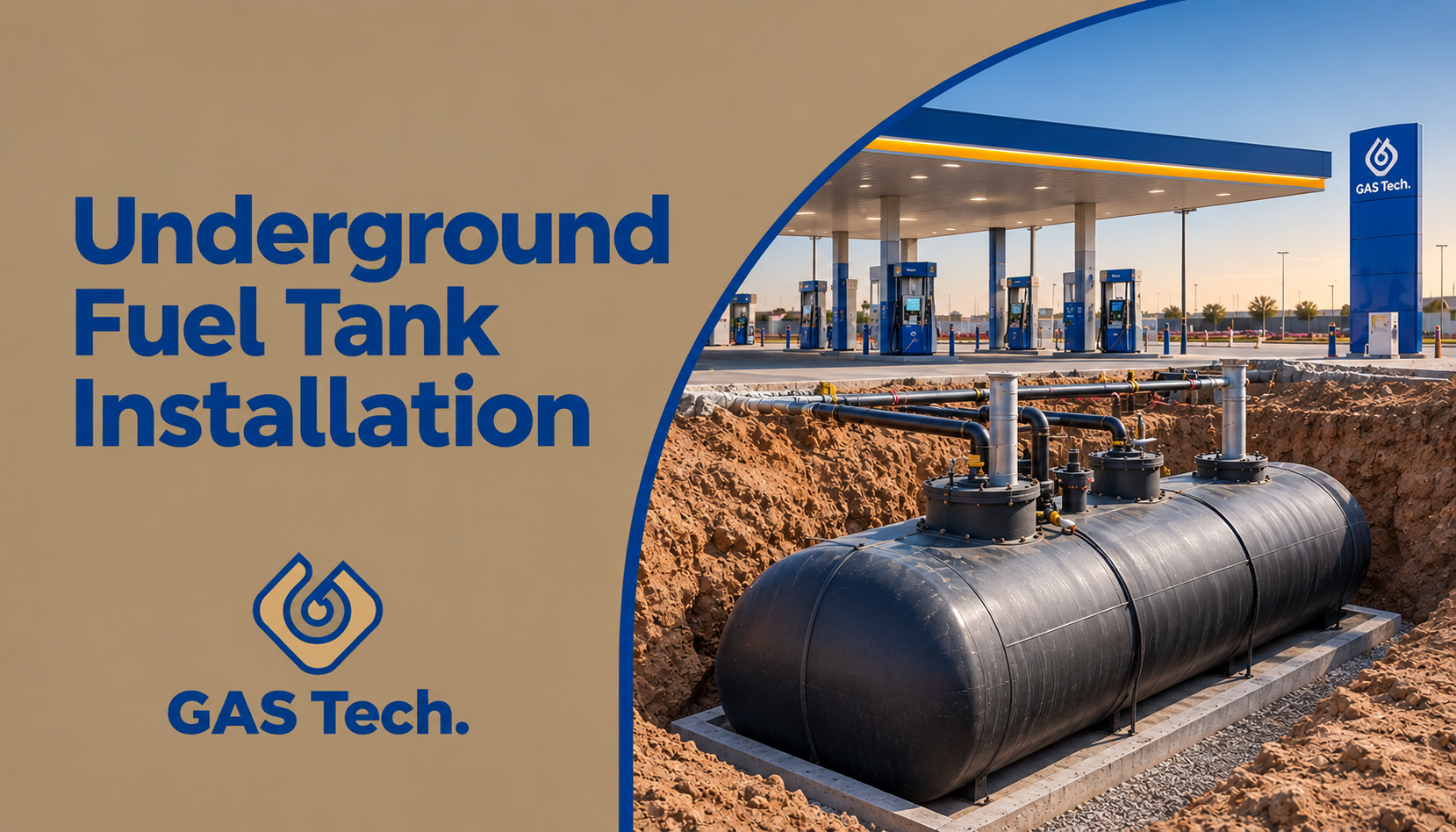
- Complete Station Construction: The building, forecourt, underground tanks, and dispensers must comply with MOMRA standards.
- Sign Contracts with Licensed Fuel Suppliers: Fuel delivery must come from approved Saudi distribution companies.
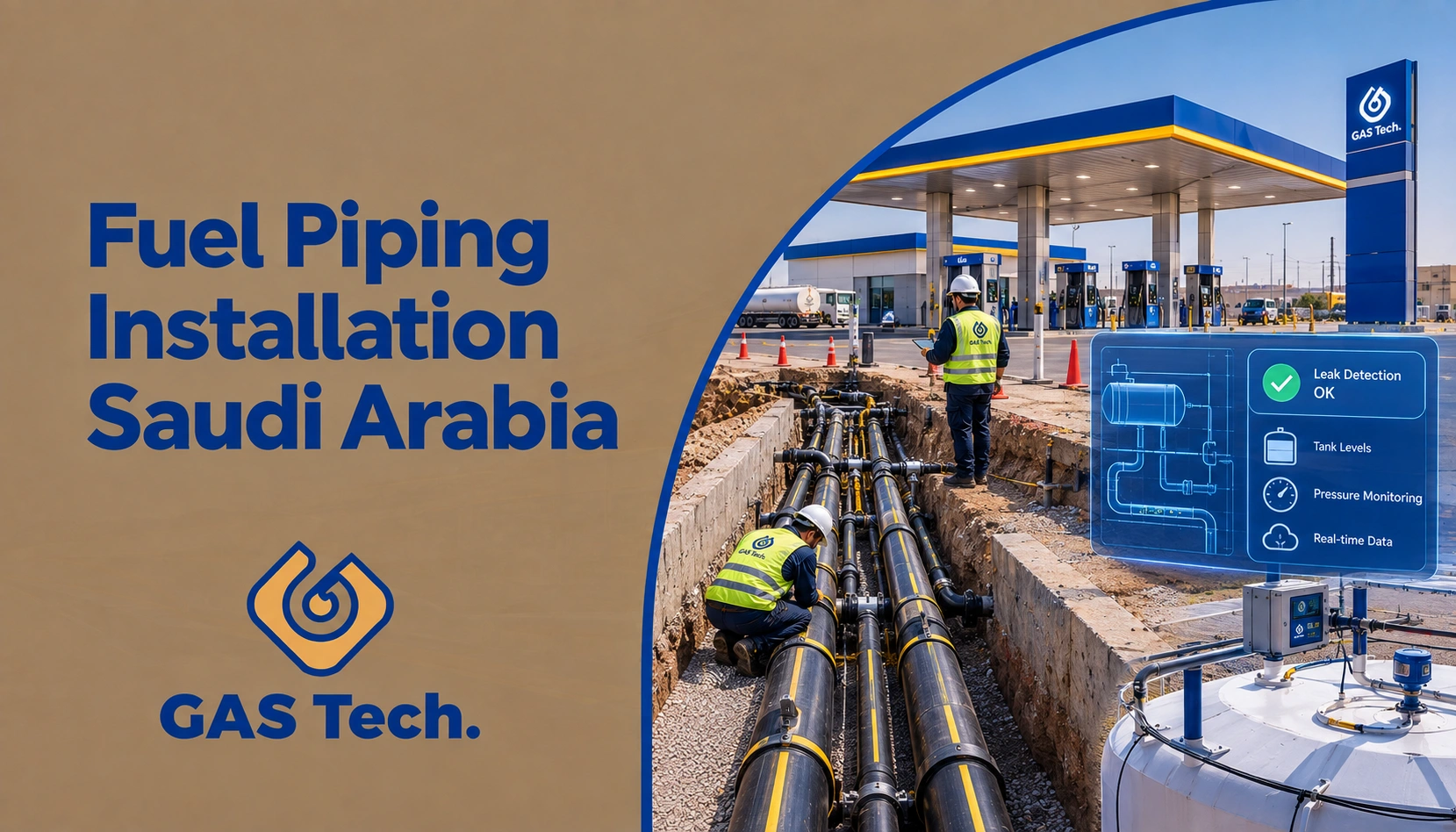
- Install Required Digital & Safety Systems: These include POS, tank monitoring (ATG), e-invoicing, and central control systems—now mandatory.
- Hire & Train Staff: Employees must be trained in fueling safety, customer service, and emergency response.
- Final Inspection & Station Launch: After final checks, the station is approved for public operation and can begin service.
Where GasTech Fits In
One of the most common reasons for rejection is failure to meet digital automation standards. GasTech solves this by providing a full Ministry-compliant automation and ERP system that ensures:
- Automated tank monitoring
- Smart POS linked to pumps
- ZATCA e-invoicing
- Remote fuel price updates
- Centralized dashboards for inspectors
With GasTech, station owners eliminate the #1 reason for license delays: missing or non-compliant digital systems.
Gas Station Operational Standards Saudi Arabia
After receiving the operating license, every fuel station in Saudi Arabia must follow strict operational, safety, staffing, and digital reporting standards. These Gas station operational standards Saudi Arabia are issued and monitored by the Ministry of Energy, Civil Defense, and Municipal authorities to ensure safe and compliant daily operations.
1. Staff Requirements
- Trained station attendants for fueling and customer service
- A certified safety supervisor on-site or on-call
- Staff trained in emergency response, fire handling, and fuel spill control
- Mandatory uniforms and clear role identification (cashier, forecourt operator, supervisor)
2. Digital Records & Reporting
Modern fuel stations are required to maintain fully digital, real-time records, including
- Automated tank level reports (ATG)
- Shift closing reports (fuel sold, cash collected, POS summary)
- E-invoicing linked to ZATCA
- Fuel deliveries and stock movement.
- Maintenance and incident logs.
These records must be accessible for inspection at any time.
3. Safety & Environmental Standards
The Ministry of Energy enforces detailed safety rules, especially during fuel unloading, storage, and daily operation. Key regulatory requirements include:
Fuel Tank Unloading Rules
- All fueling and vehicle movement must stop during tanker unloading
- The unloading area must be secured with cones, barriers, and warning signs
- A safety perimeter of at least 1 meter around the unloading zone is mandatory
- Fuel tankers must be free from mechanical defects or leakage risk
- Tank access routes must be clear and marked for easy entry and exit.
Where GasTech Adds Compliance Value
GasTech’s automation system ensures full alignment with operational rules through:
- Real-time ATG tank monitoring.
- Automatic shift closing & digital logs.
- ZATCA-ready POS & e-invoicing.
- Fuel delivery tracking from tanker to tank.
- Safety alerts and remote monitoring.
With GasTech, station owners don’t need to worry about missing Gas station operational standards Saudi Arabia—the system handles compliance automatically.
Fuel Station Rehabilitation Saudi Arabia
Saudi regulations now require older fuel stations to upgrade their infrastructure, safety systems, and digital technologies to meet the latest national standards. Any station that still operates with manual processes, outdated tanks, unsafe layouts, or noncompliant systems is subject to fines, suspension, or forced shutdown.
When Does a Station Need Fuel station rehabilitation Saudi Arabia?
- Use of manual pumps or non-integrated POS systems
- Lack of ATG tank monitoring or automated reporting
- Failing Civil Defense or Ministry inspections
- Structural issues (spacing, canopy, disability access, fire protection)
- Inability to issue ZATCA-approved e-invoices
- Frequent fuel loss, leakage, or undocumented stock variation
GasTech allows station owners to upgrade faster, pass inspections, and stay licensed—without shutting down operations.
Need an end-to-end digital compliance system for your fuel station? Contact GasTech today and get a fully Fuel station infrastructure requirement—from pump automation to central platform control.
FAQs
Is digital fuel monitoring mandatory in Saudi stations?
Yes, Fuel station infrastructure requirements need to be equipped with automated fuel-management systems, including tank gauging (ATG) and digital monitoring linked to central control systems.
How long does it take to get a fuel station license approved?
The timeline varies significantly depending on documentation, permits, construction readiness, and regulatory reviews. Some sources estimate 2 to 12 weeks for business license processes in Saudi Arabia generally.