

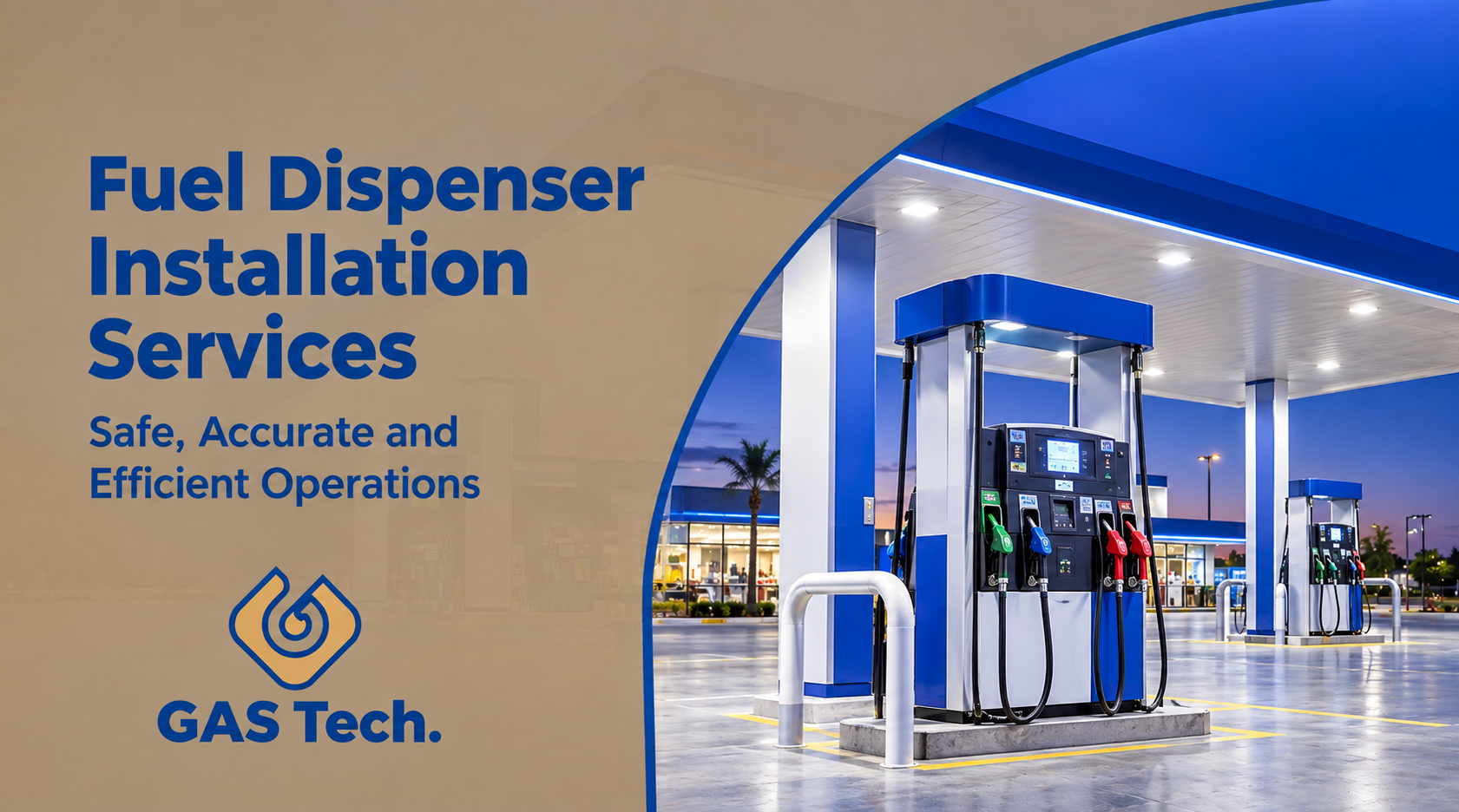
Fuel dispenser installation is a critical step in building a safe, accurate, and efficient fuel station. A dispenser must be correctly positioned and connected to fuel lines, electrical systems, control equipment, tank monitoring, and point-of-sale platforms before operation begins. After commissioning, fuel dispenser calibration helps verify that the displayed quantity matches the volume delivered, while planned fuel dispenser maintenance supports reliable performance and reduces unexpected downtime.
GasTech provides integrated fuel station solutions in Saudi Arabia, covering equipment supply and connection, automation, monitoring, preventive maintenance, system development, and technical support. By managing these services within one connected operational environment, station owners can improve data accuracy, strengthen oversight, reduce manual errors, and make faster decisions based on real-time information across their operations.
Why Professional Fuel Dispenser Installation Matters
Correct fuel dispenser installation plays an essential role in maintaining safety, measurement accuracy, equipment reliability, and smooth traffic movement within the station. Professional installation helps achieve the following:
- Positioning dispensers correctly to ensure convenient vehicle access and reduce the risk of accidental impact.
- Installing fuel pipes and connections correctly to help prevent leaks, operational faults, and unexpected shutdowns.
- Completing electrical connections and grounding according to approved safety requirements.
- Connecting dispensers properly with communication systems, tank monitoring, and point-of-sale platforms.
- Reviewing fuel types, the number of dispensers and hoses, tank locations, and expected station traffic.
- Planning piping routes, power supplies, ventilation, drainage, protective barriers, and maintenance access.
- Following approved engineering plans, manufacturer instructions, local requirements, and relevant safety procedures.
- Adapting the installation to the station’s dimensions, equipment models, capacity, and operating conditions.
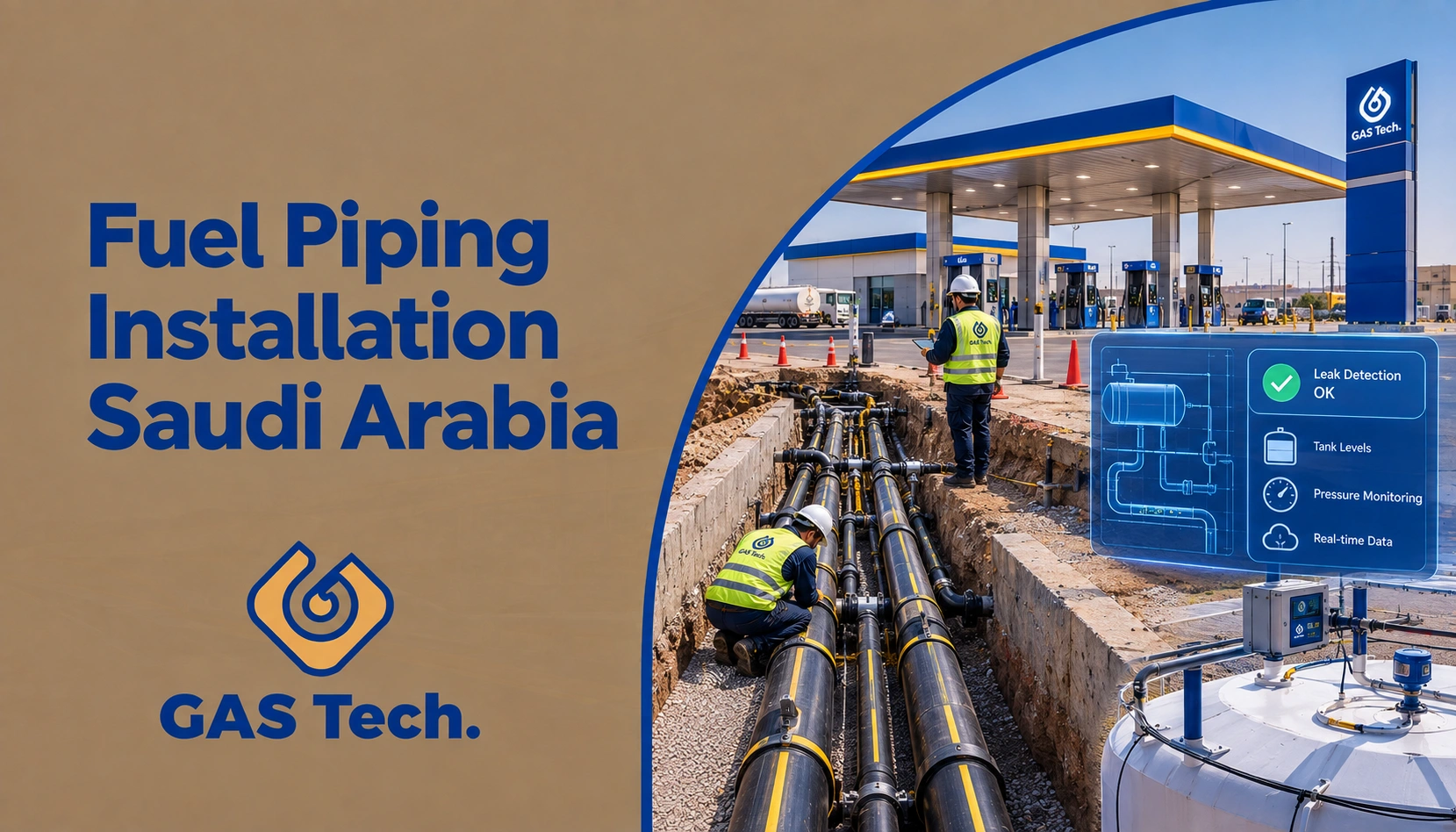
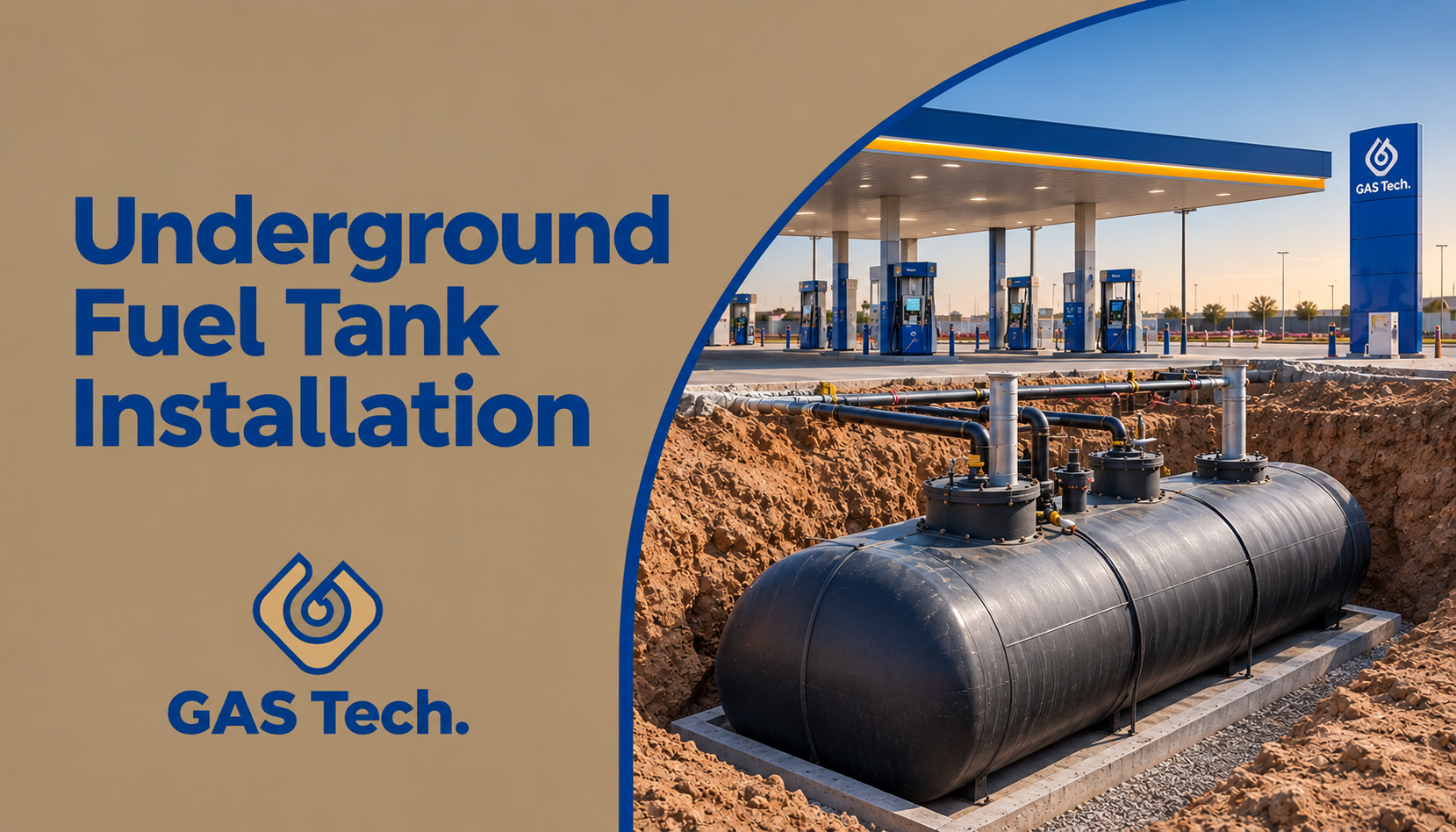
GasTech supports fuel station projects from site preparation and infrastructure work through equipment supply, system connection, testing, and commissioning. Its services include excavation and backfilling, concrete bases for tanks and dispensers, electrical networks, underground extensions, canopies, and supporting facilities that form part of the wider fuel station infrastructure requirements for safe and reliable operation.
This enables GasTech to coordinate fuel dispenser installation with the physical infrastructure and digital systems required for safe and reliable operation.
Fuel Dispenser Installation Process
The exact fuel dispenser installation process varies according to the manufacturer, station design, fuel system, and approved project specifications. However, a professionally managed project normally follows a structured sequence:
- Site and requirements assessment: The team reviews the approved layout, dispenser locations, tank and pipe routes, traffic movement, power requirements, and system-integration needs.
- Foundation and island preparation: A stable mounting area is prepared according to the dimensions and load requirements of the selected equipment, with suitable protection against vehicle impact.
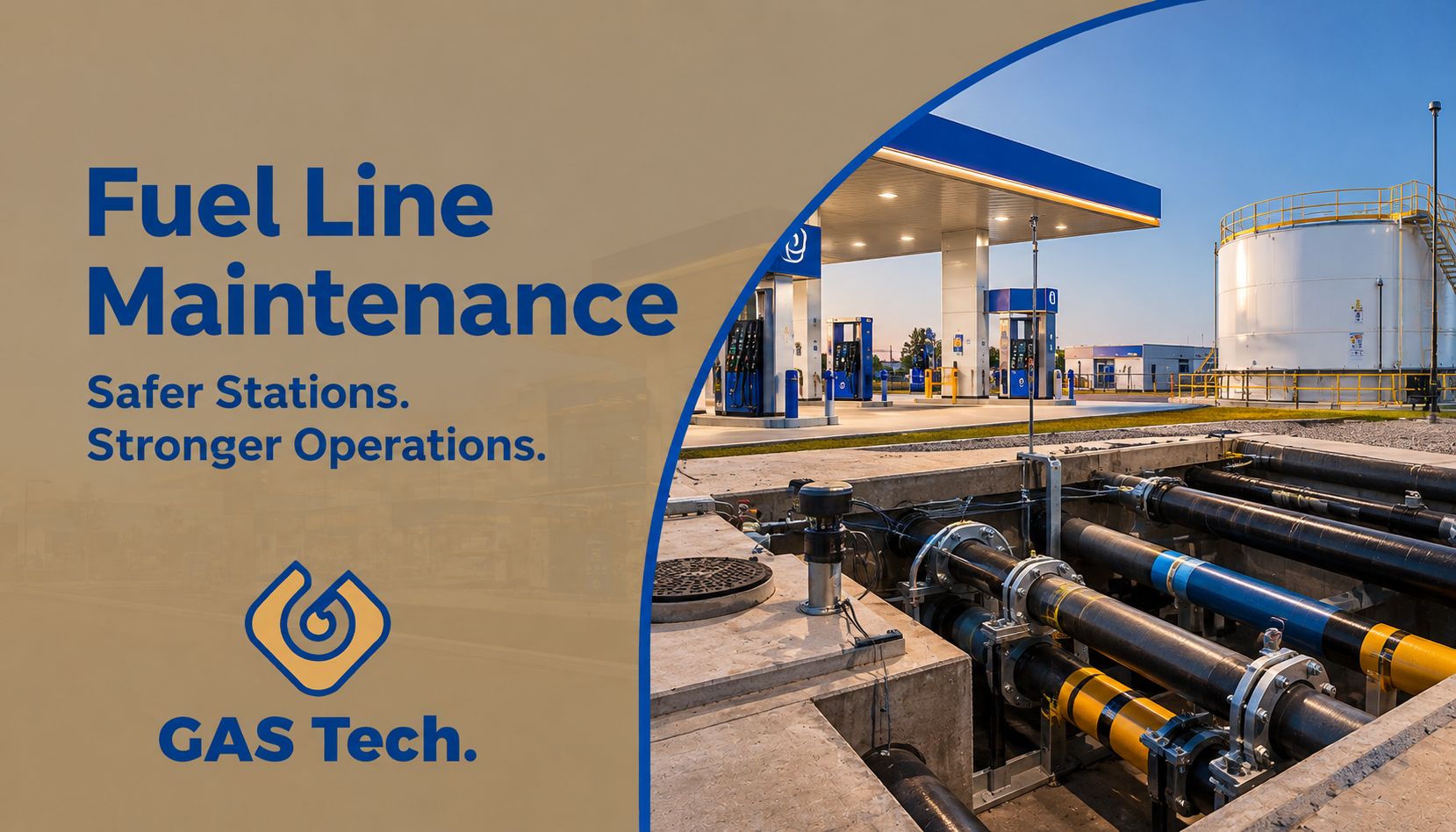
- Fuel-line preparation: Compatible piping, valves, containment components, and connections are installed and checked in accordance with the engineering design and manufacturer requirements.
- Dispenser positioning and fixing: The unit is carefully positioned, aligned, and secured while leaving safe access for inspection and future servicing.
- Electrical and communication connections: Power, grounding, emergency controls, data cables, and communication links are completed by qualified personnel.
- System integration: The dispenser is linked to the forecourt controller, point-of-sale platform, monitoring tools, and the station’s central management system where applicable.
- Testing and commissioning: Connections are inspected, the system is checked for safe operation, transactions are tested, and measurement accuracy is verified before the dispenser enters service.
Documentation and staff orientation should also form part of the handover. Operators need to understand standard use, shutdown procedures, warning signs, and the correct route for reporting faults. This reduces misuse and makes subsequent fuel dispenser maintenance more effective.
What Is Fuel Dispenser Calibration?
Fuel dispenser calibration is the process of checking whether the quantity shown on the dispenser matches the volume actually delivered. A trained technician dispenses a known amount into an approved calibrated measure, compares the physical volume with the dispenser reading, and makes authorised adjustments when the result falls outside the applicable tolerance. The unit is then retested and the results are recorded.
Calibration accuracy may be affected by mechanical wear, meter condition, component quality, incorrect procedures, environmental conditions, or changes following repair work. Temperature can influence fuel volume, while inconsistent test practices can produce unreliable comparisons. For this reason, technicians should use suitable measuring equipment, follow standardised procedures, control the test conditions as far as reasonably possible, and document the readings and adjustments.
Only competent and appropriately authorised professionals should perform fuel dispenser calibration. The applicable Saudi requirements, official verification procedures, manufacturer instructions, and approved measurement tolerances should always take priority over generic figures published for other countries or equipment models.
Why Regular Fuel Dispenser Calibration Is Important
Regular fuel dispenser calibration helps stations maintain accurate measurements, protect revenue, and provide customers with the correct quantity of fuel. Its main benefits include:
- Preventing inventory losses: If a dispenser delivers more fuel than it records, small differences can create significant losses across thousands of transactions.
- Protecting customer rights: If the delivered quantity is lower than the displayed amount, the station may face complaints, loss of trust, and compliance issues.
- Improving sales accuracy: Correct calibration supports more reliable sales data, inventory reconciliation, and financial reporting.
- Detecting performance changes: Periodic testing helps technical teams identify meter inaccuracies, mechanical wear, or operational problems early.
- Supporting better recordkeeping: Calibration records can document the test date, measured volume, observed variance, adjustments, technician details, and final results.
- Strengthening management decisions: Accurate readings allow managers to compare dispenser transactions with tank levels, inventory records, and sales reports.
GasTech strengthens this process by connecting dispenser, sales, inventory, and tank data within one operational environment. This allows station managers to review fuel dispenser calibration results alongside real-time transaction and inventory information, improving oversight and helping them detect discrepancies more efficiently.
When Should Fuel Dispenser Calibration Be Performed?
The calibration schedule should follow applicable Saudi regulations, verification requirements, the dispenser manufacturer’s recommendations, and the station’s maintenance programme. It may also be necessary after installation, meter replacement, repairs that affect measurement, suspected inaccurate delivery, broken seals, unusual inventory differences, or a dispenser impact incident.
Fuel Dispenser Maintenance and Preventive Care
Fuel dispenser maintenance includes routine inspection, cleaning, testing, adjustment, repair, and replacement of worn or damaged components. Although modern dispensers are designed for demanding environments, hoses, nozzles, filters, seals, displays, card readers, electrical components, and internal mechanisms remain subject to wear and contamination.
Complex fuel dispenser maintenance should be completed by technicians who understand the specific make and model and have the correct diagnostic tools. Station staff can perform approved daily observations and surface cleaning, but they should not open protected compartments, alter meters, or attempt electrical or fuel-system repairs without the necessary competence and authorisation.
How GasTech Enables Automated Fuel Dispensing
GasTech connects fuel dispensers with mobile applications, point-of-sale systems, payment terminals, and integrated dispenser screens through an automated fuel dispensing system. This allows customers to select the required quantity or value, complete payment, and activate the correct pump and nozzle through an automated process. The system can support four main refuelling methods:
1. Refuelling Through the GasTech Mobile Application
The customer downloads the GasTech application and adds credit to their account. The system generates a QR code, which the customer scans using the reader installed on the dispenser. After selecting the required fuel quantity or value and pressing the start button, the system sends an operating command to the pump. Refuelling stops automatically when the available balance is used or the selected limit is reached.
2. Payment Through the Station’s Point-of-Sale System
The customer provides the pump and nozzle numbers to the employee inside the station’s supermarket. The employee enters the required quantity or value through the fuel station point-of-sale system, and payment is completed using a bank card or the customer’s GasTech mobile account. The system then activates the selected dispenser and automatically stops refuelling when the specified quantity or value is reached.
3. Payment Through a Terminal Near the Dispensers
Customers can use a payment terminal located beside the dispensers. After selecting the correct pump and nozzle, they choose the required fuel quantity or value and pay by bank card or through their GasTech account. The system authorises the transaction, starts the correct dispenser, and stops it automatically when the selected limit is reached.
4. Refuelling Through the Dispenser Screen
The customer selects the nozzle through the screen installed on the dispenser, opens the GasTech application, and scans the generated QR code. After choosing the required quantity or value and confirming the transaction, the system sends a command to start dispensing. The pump stops automatically when the selected limit is reached or the customer’s available balance is fully used.
Why Choose GasTech for Fuel Dispenser Services?
GasTech manages the dispenser as part of a complete fuel-station ecosystem rather than as an isolated piece of equipment. By connecting dispensers with a fuel station automation system, station operators can coordinate dispensing, transactions, monitoring, and operational controls within one connected environment. Its solutions include:
- Equipment supply and connection.
- Fuel station automation.
- Central management dashboards.
- Inventory and tank monitoring.
- ERP and point-of-sale integration.
- Preventive maintenance and fault monitoring.
- Software development and technical consultation.
- Employee training.
- RFID-based fuel management for company fleets.
- Mobile, point-of-sale, terminal, and dispenser-screen payment options.
- Automatic pump activation and shutdown according to the selected quantity, value, or available balance.
Whether the project involves a new station, replacement equipment, system integration, fuel dispenser calibration support, or a structured fuel dispenser maintenance programme, GasTech can assess the station’s operational requirements and provide a connected solution tailored to its infrastructure, transaction methods, and daily operating needs.
Contact GasTech today to request a technical consultation or quotation for fuel dispenser installation, calibration, maintenance, automation, and station-management solutions in Saudi Arabia.
FAQS
Yes. Using an integrated provider can simplify coordination between dispenser hardware, piping, electrical work, control equipment, software, testing, and after-sales support. The provider must still use competent personnel and follow the approvals and regulatory requirements applicable to each task.
The correct interval depends on the dispenser model, usage volume, operating environment, service history, manufacturer guidance, and regulatory requirements. Daily visual checks should be supported by a documented preventive maintenance schedule prepared for the specific station.