




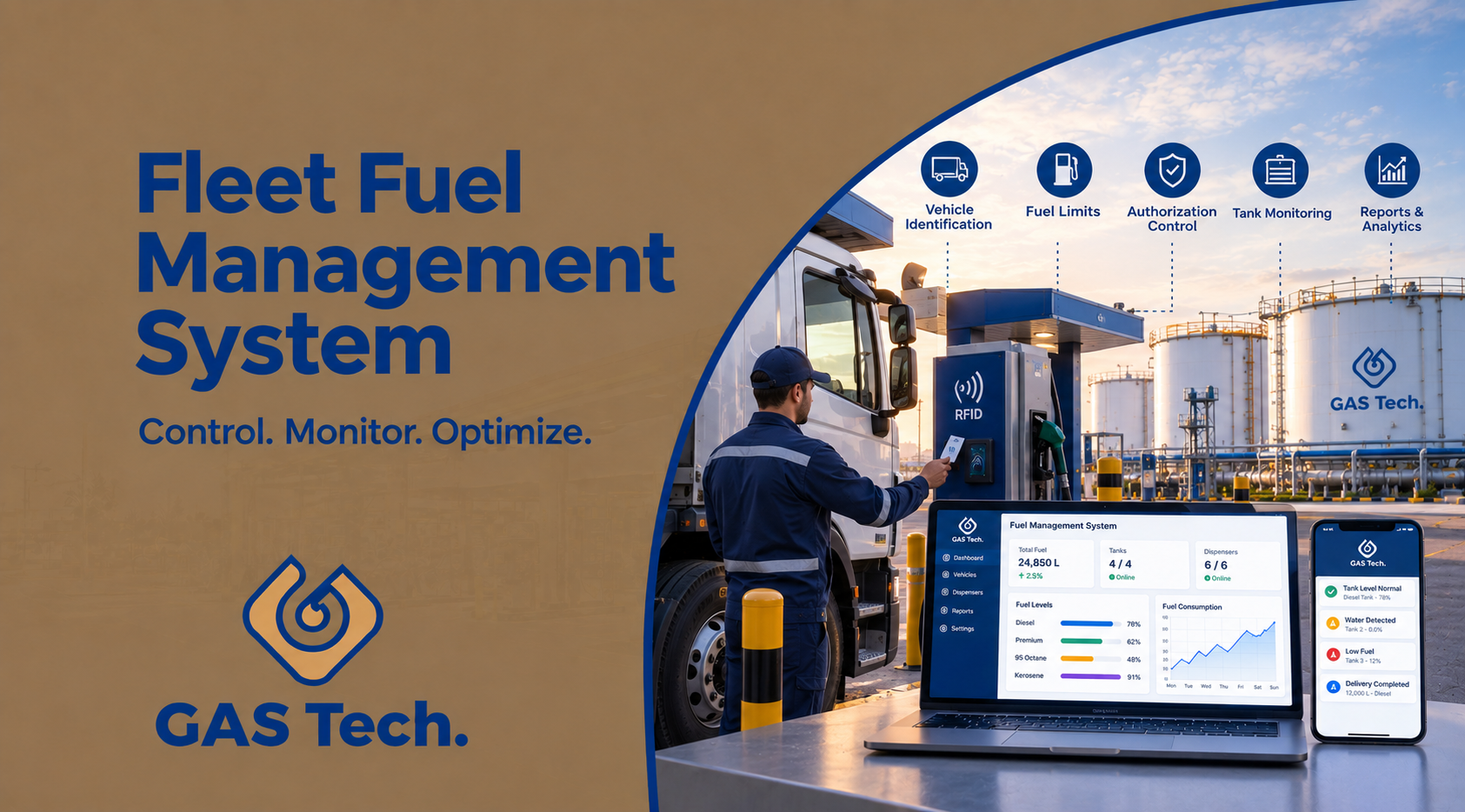
A Fleet fuel management system helps factories, transport companies, and other businesses control fuel supplied to company vehicles. It replaces paper records with a connected process that identifies vehicles, applies approved fuel limits, and records dispensing. Managers can also monitor tanks and activity through one platform.
GasTech provides an integrated solution for internal fuel stations in Saudi Arabia. It connects RFID identification, dispensers, tanks, inventory data, and reports. This guide explains how it works, its equipment and benefits, and GasTech’s role.
What Is a Fleet Fuel Management System?
A Fleet fuel management system combines hardware and software to control and record fuel supplied to vehicles or equipment. It is useful for private stations operated by factories, logistics companies, construction businesses, farms, and large facilities.
The system identifies a vehicle before fuel is released. It checks whether the vehicle is approved and whether it has an available daily or monthly allowance. If the request is accepted, the dispenser starts. When the approved quantity is reached, dispensing stops and the transaction is saved.
Unlike GPS tracking or fuel cards, GasTech focuses on controlling fuel at the company’s own station and connecting each transaction to an approved vehicle.
Contact GasTech to discuss your fleet, tanks, dispensers, and reporting needs and receive a solution designed for your site.
How a Vehicle Fuel Dispensing System Works
The vehicle fuel dispensing system starts when a vehicle reaches the pump. An RFID tag allows the system to identify it automatically. This identification process is part of the RFID Fuel Management System, which connects vehicle records with fueling authorization and consumption control. The platform then checks the vehicle record, fuel type, available allowance, and rules set by the business.
The process normally includes:
- The RFID reader identifies the vehicle.
- The system confirms that it is authorized.
- The dispenser opens within the approved limit.
- Fuel is supplied to the vehicle.
- Dispensing stops at the selected quantity.
- The transaction is recorded immediately.
This reduces manual work and helps prevent supply to unknown vehicles. GasTech links the activity to a central dashboard for direct review.
Main Parts of the Fuel Management Solution
A dependable Fleet fuel management system needs connected field equipment and software. It may include:
- RFID tags and readers for vehicle identification.
- A forecourt controller for pump operations.
- A dispenser converter for communication with pumps.
- Fuel dispensers and measuring equipment.
- Sensors for monitoring tank levels.
- A network connection and central dashboard.
- User permissions, reports, and alerts.
GasTech supplies and connects this equipment as part of its Fuel Station Automation System Saudi Arabia, allowing pumps, tanks, inventory, and management systems to exchange data. The final list depends on the site.
Control Fuel Limits for Every Vehicle
One important function of a Fleet fuel management system is managing allowances. A business can define a daily or monthly fuel limit for each vehicle. Different rules may be applied to trucks, service cars, buses, or heavy equipment based on their work.
When a vehicle reaches its limit, the system stops further dispensing according to the approved settings. Managers can also block a vehicle that is no longer active or allowed to use the station. Every completed event is recorded with details such as the vehicle, date, time, quantity, and dispensing point, depending on the system setup.
These records help compare vehicle consumption, investigate changes, and apply one approval process across the fleet.
Connect Vehicle Dispensing with Tank Monitoring
Vehicle control is only one part of fuel management. The company must also know how much fuel is available in its tanks. GasTech connects tank monitoring sensors with the central platform to provide live visibility of fuel levels through its Fuel Tank Monitoring System in Saudi Arabia.
Our GasTech system can record quantities added during delivery, monitor water and tank temperature, and send alerts when fuel reaches a set level. Available functions depend on the sensors and system configuration selected for the project.
Connecting tank data with a vehicle fuel dispensing system allows managers to compare received fuel, dispensed fuel, and the remaining balance. A difference does not always prove theft or leakage, but it gives the technical team a clear reason to review records, equipment, and tank conditions.
Reports That Support Daily Decisions
A Fleet fuel management system turns separate fueling events into organized information. Managers can review consumption by vehicle, time, station, or another available field instead of collecting paper forms.
Useful reports and alerts can cover:
- Fuel supplied to each vehicle.
- Total consumption during a selected period.
- Vehicles that reached their limits.
- Attempts by unauthorized vehicles.
- Current tank levels and low-stock warnings.
- Fuel delivery and dispensing records.
- Unusual consumption that needs review.
These reports support fuel purchasing, stock planning, and internal control. They provide a digital record of which vehicle received fuel, when the transaction happened, and how much was supplied.
Integration with ERP and Inventory Systems
Fuel data becomes more useful when it supports the wider business process. GasTech provides integration options for pumps, inventory management, tank monitoring, point-of-sale functions, and ERP systems. The exact scope is defined after the existing hardware and software are reviewed.
With a connected Fleet fuel management system, teams can review delivery, tank balance, and vehicle dispensing data in one environment. GasTech can also adapt software functions for specific approvals, reports, or internal links.
How GasTech Implements the System
GasTech begins by studying the vehicles, tanks, dispensers, fuel types, and operating locations. The team also reviews how vehicles are approved, how limits are set, and which reports are required.
Implementation may include:
- Site and operational assessment.
- Selection of compatible hardware and software.
- Supply and connection of controllers, readers, tags, and sensors.
- Integration with pumps, tanks, inventory, or ERP as required.
- Creation of vehicle records and fuel limits.
- Testing identification, authorization, dispensing, and stopping.
- User training, commissioning, and technical support.
This approach ensures the vehicle fuel dispensing system is designed around the real operation, rather than supplied as a fixed package that may not fit the site.
Why Choose GasTech?
GasTech covers the internal fueling process as a connected operation. Its services include equipment supply and connection, station automation, RFID identification, fuel limits, tank monitoring, inventory management, central dashboards, ERP integration, preventive maintenance, and technical support.
This makes the Fleet fuel management system useful at both pump and management levels. Vehicles receive fuel under controlled rules, while managers receive the records and alerts needed to supervise the operation.
Take Control of Fleet Fuel with GasTech
GasTech provides a Fleet fuel management system for internal stations in factories and companies across Saudi Arabia. This Fleet fuel management system brings RFID control, pump connection, tank monitoring, and central reporting into one environment, giving the business a clearer view of fuel from storage to final dispensing.
Contact GasTech today to request an assessment and build a vehicle fuel dispensing system that matches your fleet, site, and fuel control requirements.
FAQs
It uses RFID tags to identify each vehicle before dispensing begins. If the vehicle is not registered or has exceeded its approved fuel limit, the system prevents the pump from dispensing fuel.
Yes. GasTech can connect multiple tanks, dispensers, and vehicles to one central platform, allowing managers to monitor fuel levels, transactions, vehicle allowances, and consumption reports from a unified dashboard.