underground fuel piping

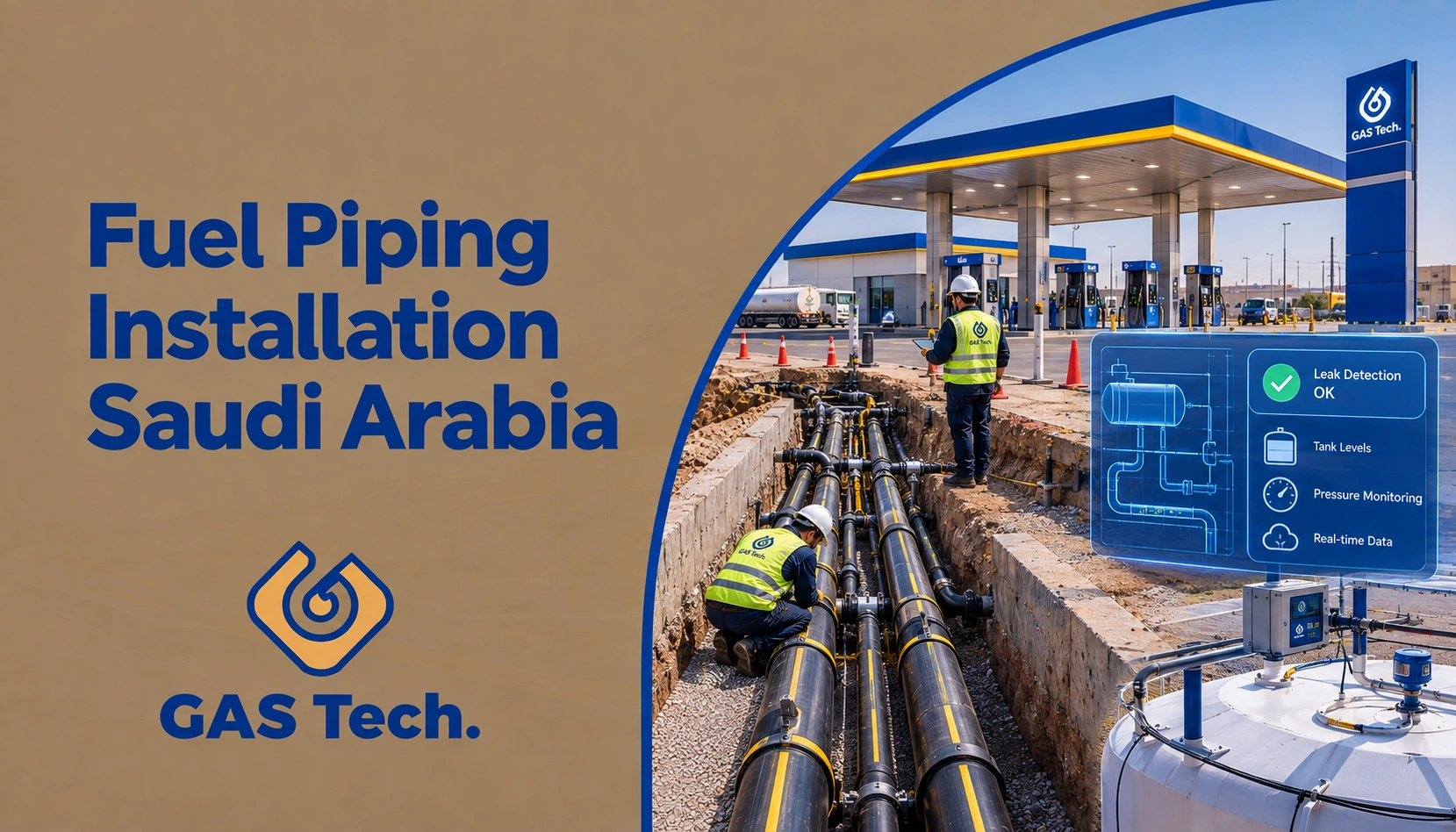
Fuel Piping Installation Saudi Arabia showing underground fuel pipelines, technicians installing fuel lines at a modern gas station, storage tanks, and digital leak detection and pressure monitoring systems.

Professional fuel line infrastructure forms the baseline for safe, efficient, and compliant gas stations, commercial fleet hubs, and industrial sites across Saudi Arabia. Handling liquid hydrocarbons requires extreme precision to eliminate environmental contamination and prevent costly product loss. Choosing an experienced fuel piping installation contractor that follows Fuel Station Infrastructure Requirements ensures your site operates seamlessly while protecting your capital investment.


GasTech manages your entire forecourt project end-to-end. From initial excavation and ground protection to underground fuel piping deployment, fuel dispenser connections, and smart automation system integration, GasTech delivers full regulatory compliance and peace of mind.

The Importance of Choosing a Specialized Fuel Piping Installation Contractor

Developing underground fuel transfer systems is a critical engineering phase where even minor design errors lead to serious environmental and financial consequences. Partnering with a specialized fuel piping installation provider prevents underground fuel leaks, vapor accumulation, and structural failures that could cause sudden station closures or catastrophic site incidents.

Beyond operational hazard mitigation, certified fuel contractors guarantee strict compliance with Saudi Arabian regulatory standards, including requirements from the Ministry of Energy and the Saudi Standards, Metrology and Quality Organization (SASO). Expert technicians possess the technical knowledge needed to lay high-grade double-walled piping, perform high-precision line pressure testing, and integrate environmental monitoring systems.

Furthermore, a qualified fuel piping installation company offers comprehensive maintenance programs and long-term warranties. This guarantees continuous operational efficiency, protects forecourt assets, and eliminates costly operational downtime.

Want to safeguard your fuel infrastructure from unexpected leaks? Contact the GasTech technical team today for a full forecourt audit.

Criteria for Selecting the Right Fuel Piping Installation Partner

Evaluating a fuel piping installation contractor in Saudi Arabia requires assessing essential technical and operational criteria:

  • Material Quality and SASO Compliance: Adherence to Ministry of Energy and SASO specifications, using approved corrosion-resistant pipes that preserve fuel quality.
  • Proactive Safety Systems: Implementation of automated leak detection, emergency shut-off valves, and vapor recovery systems to safeguard the environment.
  • Turnkey Infrastructure Engineering: Comprehensive project execution, covering everything from trench excavation to dispenser integration.
  • Modern Automation Integration: Seamless connection to forecourt controllers, electronic point-of-sale (POS) systems, and digital inventory monitoring platforms.
  • Transparent Service and Support: Clear cost structures combined with routine preventive maintenance programs to ensure long-term system reliability.

Partnering with an experienced fuel piping installation specialist ensures your site meets all local codes. GasTech combines engineering expertise, strict adherence to national standards, and advanced digital tools to deliver high-performance fuel networks.

Keep your pipe network operating at peak performance. Discover how GasTech digitizes pressure monitoring across your entire site.

Engineering Steps for Underground Fuel Piping Extensions

At GasTech, precision governs every phase of underground Fuel piping installation to guarantee long-term operational safety and environmental protection. Our field methodology follows four core engineering stages:

1. Engineering Survey & Permitting 

Fieldwork begins with precise trench excavation along approved design routes. Soil is compacted and insulated with specialized protective layers to prevent ground settlement that could stress pipeline fittings over time.

2. Double-Walled Fuel Line Contractor Standards

As a premier fuel line contractor, GasTech installs high-density polyethylene (HDPE) double-walled flexible pipes. The outer secondary containment wall prevents fuel from leaching into the soil if an internal pipe breach ever occurs.

3. Hydrostatic and Line Pressure Testing

Before final trench backfilling, GasTech engineering teams conduct rigorous hydrostatic pressure tests. This verifies joint integrity, weld strength, and leak-tight performance under maximum working pressure.

Prevent environmental risks and eliminate fuel loss before it hits your bottom line. Partner with GasTech for reliable station protection.

Connecting Fuel Piping Infrastructure to Saudi Storage Tanks and Automation

GasTech creates an integrated digital and mechanical infrastructure, connecting underground fuel piping networks to bulk storage tanks for zero-loss fuel delivery.

  • Regulatory Compliance: Our engineering practices strictly conform to Saudi Ministry of Energy regulations for Underground Fuel Tank Installation and environmental protection.
  • Smart Leak Detection (ATG): We install high-precision magnetic probes inside secondary containment sumps, linking them directly to Automatic Tank Gauging (ATG) consoles for real-time inventory tracking and immediate leak alerts.
  • Cloud-Based GasTech ERP Integration: As a full-service fuel piping installation specialist, we connect all forecourt sensors and submersible pumps to our central cloud platform. This provides complete visibility over stock movement from bulk delivery to final pump dispensing.
  • Automated RFID Fleet Refueling: Our piping infrastructure integrates smoothly with RFID vehicle identification systems, automating fleet fuel authorization without manual intervention.

Noticing unexplained slow flow rates? Let GasTech install smart line leak sensors to pinpoint hidden issues instantly.

How to Execute Fuel Dispenser Installation on Site

Installing surface fuel dispensers represents the final connection point between underground pipelines and customer delivery. GasTech applies strict engineering protocols during Fuel Dispenser Installation to ensure proper connection between underground piping and dispensing equipment:

  1. Concrete Footings and Dispenser Sumps: Technicians construct reinforced concrete islands and install corrosion-resistant secondary containment chambers beneath each pump. Fuel pipes are laid with a minimum 1% slope toward storage tanks over a compacted 15 cm sand cushion. 
  2. Mechanical Connection and Product Separation: Fuel lines connect securely to dispenser shear valves. Gasoline and diesel piping circuits are completely separated to eliminate product cross-contamination and maintain balanced pump pressure. 
  3. Electrical Wiring and Forecourt Control: Power lines connect through explosion-proof conduit. Dispensers are programmatically linked to the GasTech Forecourt Controller and POS terminal for automatic billing and transaction logging. 
  4. Meter Calibration and Safety Valve Testing: Flow meters undergo precise volume calibration, while emergency shear valves are tested to ensure instant fuel shut-off during accidental impact. 

Simplify your daily forecourt maintenance routine. Schedule a consultation with GasTech to streamline your site operations.

GasTech Fuel Line Installation Saudi Arabia Solutions

GasTech offers complete industrial, commercial, and retail fuel site construction across the Kingdom. Choosing GasTech for fuel line installation Saudi Arabia projects unlocks access to fully integrated operational services:

  • GasTech ERP Forecourt Automation: Single-platform management connecting dispensers, ATG systems, sales reporting, and ZATCA-compliant e-invoicing.
  • RFID Fleet Automation Systems: Automated vehicle identification and fuel quota management tailored for commercial fleets and factory sites.
  • Smart Forecourt Hardware Supply: Supply and integration of forecourt controllers, dispenser communication converters, and live tank probes.
  • Turnkey Infrastructure Engineering: Canopy construction, electrical cabling, retail buildings, and site utility layout delivered ready for commercial operation.
  • Technical Consultation and Digitalization: Detailed operational studies to optimize fuel flow, minimize unaccounted variance, and enhance customer throughput.
  • Accredited Workforce Safety Training: API-aligned safety courses for station operators, assisting facilities in meeting national “Qiwa” platform training disclosure requirements. 

Ready to upgrade to real-time leak alerts and automated inventory matching? Request a live GasTech system demo now.

Conclusion

Professional fuel piping installation is the foundation of every safe, productive, and compliant commercial fuel facility. By combining double-walled underground piping, automated leak monitoring, and cloud-based management tools, station owners achieve full operational control over their fuel assets.


Talk to GasTech consultants to select the durable components built for your exact operational needs and protect your long-term forecourt investment!
Fuel station management software Saudi Arabia

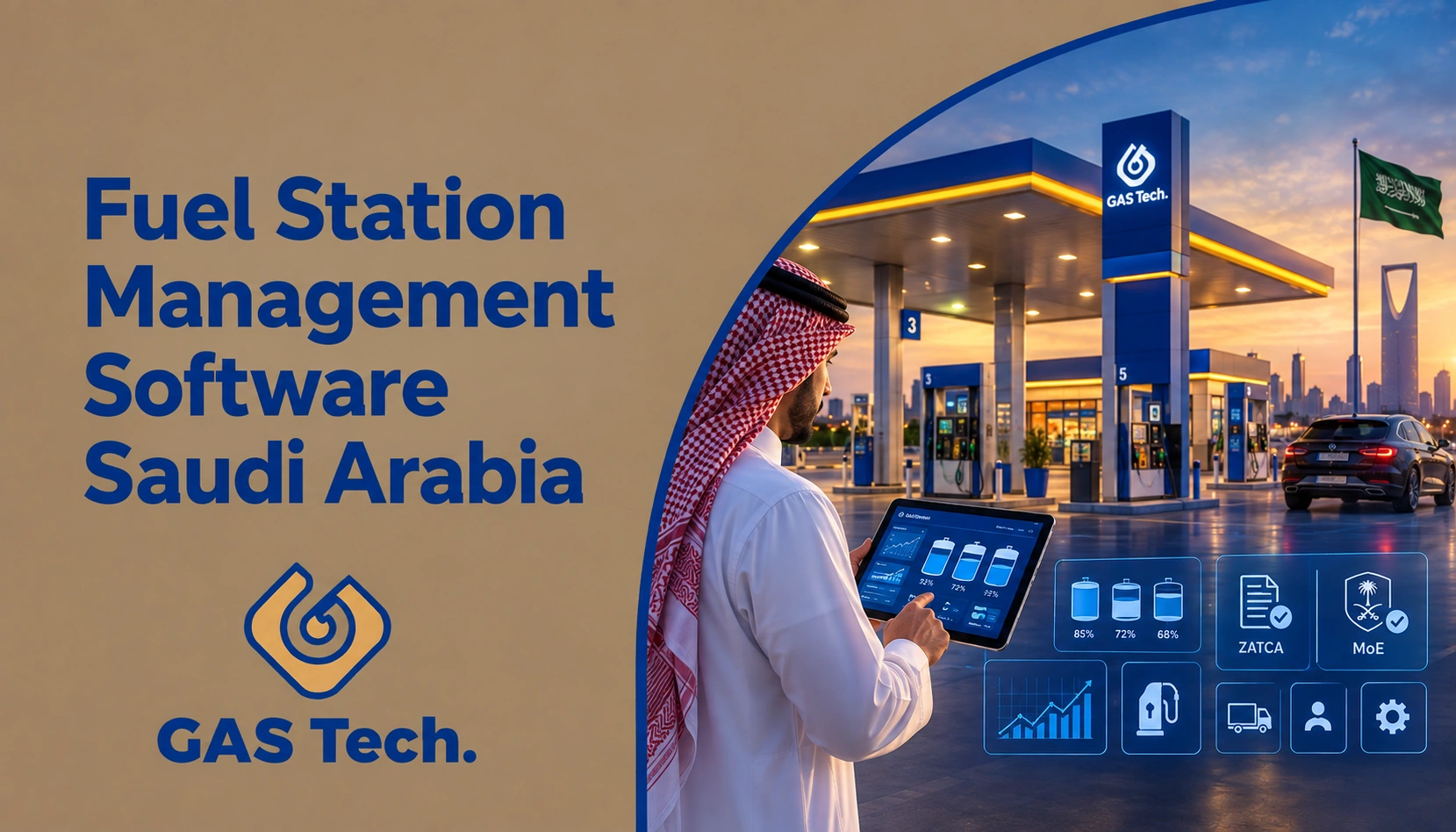
Fuel Station Management Software Saudi Arabia with a modern fuel station, digital management dashboard, tank monitoring, ZATCA and Ministry of Energy compliance indicators, and GAS Tech branding.

The fuel retail sector in the Kingdom of Saudi Arabia is changing rapidly. With the goals of Vision 2030 and the strict standards of the Ministry of Energy and ZATCA, fuel station owners now face a new reality — manual systems can no longer keep up. Managing pumps, tanks, and invoices using paper or outdated software leads to errors, losses, and non-compliance.

That’s why adopting Fuel Station Management Software Saudi Arabia is no longer a choice — it’s a must for every station that wants to stay compliant, efficient, and profitable.

The Top 3 Challenges Fuel Stations Face in Saudi Arabia

The Top 3 Challenges Fuel Stations Face in Saudi Arabia are:

1. Complex Regulatory Compliance

Fuel station owners in Saudi Arabia must meet two main regulatory standards:

  • Ministry of Energy (MoE) requirements, which demand digital monitoring of pumps, tanks, and safety systems.
  • ZATCA (Zakat, Tax and Customs Authority) requirements, which require all sales to be recorded through e-invoicing systems in real time.

Many stations struggle because their systems are not built to handle these local rules. Without automation, mistakes happen—and those mistakes can lead to costly fines or even suspension of operations. A reliable Fuel Station Management Software Saudi Arabia “Gas Tech,” ensures automatic compliance with both MoE and ZATCA standards.

2. Inventory Loss and Fuel Shrinkage

Fuel is a valuable and sensitive product. Leaks, contamination, or theft can cause big losses if they’re not detected early. Manual monitoring makes it hard to catch these issues on time.

With advanced monitoring built into Fuel Station Management Software Saudi Arabia, station owners can see exact tank levels, water contamination, and even temperature changes in real time. The software automatically alerts management if a leak or issue occurs, keeping inventory safe and operations compliant.

3. High Operating Costs and Human Errors

Manual data entry, paper-based shift handovers, and cash handling increase the chance of mistakes. These errors affect daily reports, delay decision-making, and create financial risks.
Smart automation removes these weak points. A Fuel Station Automation System Saudi Arabia connects pumps, point-of-sale systems, and accounting modules directly — no manual entry required. The result? Faster, more accurate reporting and smoother daily operations.

Fuel management system Saudi Arabia: The Key to Running a Modern Station

Modern stations can’t rely on separate systems. They need one Fuel management system Saudi Arabia that connects everything — from pumps to tanks to invoices. That’s exactly what Fuel Station Management Software Saudi Arabia Gas Tech does.

It brings together Smart Fuel Station Technology, real-time monitoring, automation, and data analytics to help owners make faster, smarter decisions. By combining the power of IoT (Internet of Things) and AI, the system ensures every part of the station works together efficiently.

Gastech: Your Complete Fuel station management software Saudi Arabia Partner

Gastech provides one of the most advanced and trusted Fuel Station Management Software Saudi Arabia solutions. It’s not just software — it’s a full automation ecosystem built for the Saudi market.

Here’s what Gastech offers:

1. Complete ERP Integration

As a complete Fuel Station ERP System Saudi Arabia, Gastech connects every part of your business:

  • Pumps and POS systems communicate directly to eliminate manual errors.
  • Tank data is synchronized automatically for real-time stock visibility.
  • E-invoices are issued instantly in full compliance with ZATCA.
  • Financial reports, HR, and maintenance data all flow into one dashboard.

This unified approach ensures accuracy, transparency, and complete control.

2. Real-Time Remote Monitoring

Gastech gives you full visibility over your station — from anywhere.

  • Instantly update fuel prices across all locations.
  • Monitor tank levels and pump performance in real time.
  • Get automatic alerts about leaks, low stock, or technical issues.

With Gastech’s remote access, you can manage multiple stations in Saudi Arabia with one click.

3. Direct Pump-to-POS Automation

With an Automated Fuel Dispensing System, every sale is captured automatically and linked to your central system. This removes the risk of human error and ensures that all transactions are accurate, verified, and compliant.

4. Tank and Leak Monitoring

The Fuel Tank Monitoring System in Saudi Arabia uses Automatic Tank Gauging (ATG) to measure fuel levels, temperature, and water contamination. If there’s a problem, management receives instant alerts — protecting both inventory and the environment.

5. Logistics and Loyalty Management

Gastech supports RFID and QR-based systems that allow companies to manage their vehicle fuel consumption safely and easily. It also offers loyalty programs to keep regular customers engaged and satisfied.

Full Compliance with Saudi Standards

Gastech was designed from the ground up to meet Saudi Arabia’s technical and legal requirements:

  • ZATCA E-Invoicing Compliance: Every transaction is automatically validated and sent to the authority in real time.
  • Ministry of Energy Certification: Gastech supports the “smart station” requirements, including centralized reporting and digital monitoring.

With Fuel Station Management Software Saudi Arabia, you can rest assured your operations meet every standard and are always inspection-ready.

The Gastech Advantage

Choosing Gastech means choosing reliability, compliance, and profit.

  • Reduce Human Errors: Automation replaces manual work, improving data accuracy.
  • Lower Costs: Minimize losses and save on labor and administrative tasks.
  • Stay Compliant: Meet all government requirements automatically.
  • Gain Control: Access live data anytime, anywhere, and make quick, confident decisions.

That’s why more station owners in the Kingdom trust Gastech’s Fuel Station Management Software Saudi Arabia to power their operations.

With Gastech’s Fuel Station Management Software Saudi Arabia, you get the technology, compliance, and local expertise you need to succeed.

Ready to transform your business? Contact Gastech today to explore our customized automation packages and see how our Fuel Station Management Software Saudi Arabia can revolutionize your operations.

Request a Free Demo.

Underground fuel tank installation

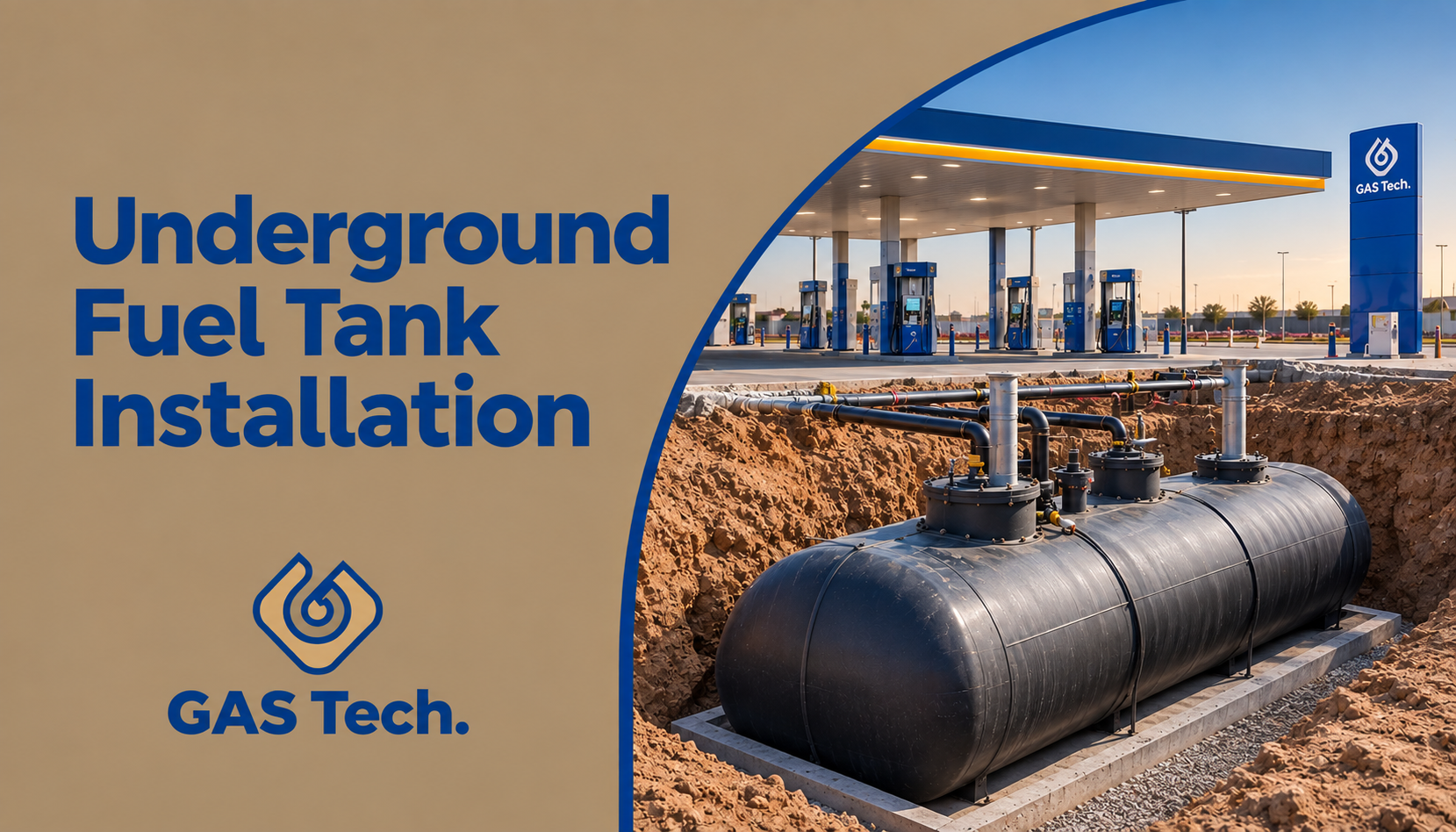
Underground fuel tank installation at a modern gas station, showing a large cylindrical fuel tank with connected piping inside an excavation, with GAS Tech. branding and the headline “Underground Fuel Tank Installation.”

Underground fuel tank installation is a critical part of developing a safe and efficient fuel facility. It requires site assessment, engineered foundations, approved tanks, secure piping, environmental protection, testing, and integration with monitoring and dispensing systems. Weaknesses in any stage can affect inventory accuracy, operational continuity, and site safety. 

GasTech provides integrated solutions in Saudi Arabia that combine civil works, tank supply and installation, fuel equipment, and smart management for retail stations, factories, and industrial facilities.

Contact GasTech to discuss your project requirements and request a tailored quotation for tank supply, installation, testing, monitoring, and fuel-system integration.

What Is Underground Fuel Tank Installation?

Underground fuel tank installation means placing an approved petroleum tank below ground and connecting it to filling points, vents, fuel lines, pumps, leak-detection equipment, and monitoring systems. The project extends from engineering studies and site preparation to placement, backfilling, testing, and commissioning.

Underground fuel tank installation serve retail stations, factories, fleet yards, and logistics centres. The correct design depends on fuel type, capacity, consumption, ground conditions, layout, and applicable requirements. Installation must therefore follow an approved, site-specific engineering plan.

Why Professional Underground fuel tank installation Matters

A properly installed tank protects people, property, fuel, and the environment. Errors in foundations, connections, venting, or backfilling can remain hidden and become expensive after operation begins. Professional execution supports:

  • Stable support that reduces movement or uneven settlement.
  • Secure fuel lines and connections that minimise leakage risks.
  • Effective environmental protection through double-wall insulation and early detection systems.
  • Accurate integration with pumps, dispensers, and tank-monitoring equipment.
  • Safe access for filling, inspection, testing, and future maintenance.
  • Compliance with approved technical drawings and relevant Saudi requirements.
  • Reliable operation with fewer interruptions and avoidable repairs.

GasTech supplies approved tanks with conformity documentation and performs installation according to recognised engineering practices, including pressure and safety testing before operation.

Underground Fuel Tank Installation Process

Although every site differs, the work normally follows this coordinated sequence:

  1. Assessment and planning: Engineers review the area, ground conditions, traffic, capacity, filling access, dispensers, and service routes.
  2. Tank selection: The team selects an approved tank for the fuel, required volume, technical specification, and project design, then reviews its certificates.
  3. Excavation and foundation: Excavation follows the approved study, and a concrete base supports the tank in the correct position.
  4. Placement and fixing: The tank is lowered, aligned, and secured while access to filling, venting, inspection, and monitoring points is preserved.
  5. Connections: Fuel lines, vents, power, sensors, and communication cables are installed. Proper routing and ongoing fuel line maintenance are also important for reducing leakage risks and maintaining reliable fuel transfer after installation.
  6. Backfilling: Approved material is placed without damaging the tank or lines, then the operational surface is prepared.
  7. Testing and commissioning: Pressure, safety, sensor, and operational tests are completed before service begins.

Contact GasTech today to discuss your underground fuel tank installation requirements and receive a tailored solution covering approved tanks, civil works, safety testing, smart monitoring, and system integration.

Tank Safety and Environmental Protection

The complete storage system needs measures that detect or contain problems early. Based on project requirements, GasTech applies leak-prevention systems, double-wall protection, monitoring equipment, and early warnings.

Because components become difficult to access after backfilling, pressure and safety checks verify tank and connection integrity before commissioning. Safety procedures must also cover excavation, lifting, connection, and testing.

After operation begins, GasTech can measure levels in real time, monitor water and temperature, record quantities around tanker unloading, and alert managers to low inventory or unusual decreases.

Diesel Tank Installation for Factories and Industrial Facilities

Diesel tank installation supports factories, logistics sites, industrial facilities, and fleet yards operating vehicles, machinery, or generators. Beyond safe storage, managers need to know who received fuel, how much was dispensed, whether it was authorised, and whether tank readings match recorded consumption.

GasTech combines diesel tank installation with internal-station automation. An RFID tag links each authorised vehicle to the pump, identifies it automatically, and permits dispensing only within its assigned allowance. This limits manual intervention, unauthorised use, and inaccurate entries.

The dashboard assigns daily or monthly limits, stops dispensing at the limit, reports consumption by vehicle, and alerts supervisors to unusual patterns.

Smart Monitoring for Underground Fuel Tanks

GasTech connects underground storage to specialised hardware and smart sensors. A Fuel Tank Monitoring System in Saudi Arabia can continuously track tank levels, temperature, water presence, inventory changes, and potential anomalies through connected sensors and monitoring software. The monitoring platform offers:

  • Real-time readings of the quantity stored in each tank.
  • Measurements before, during, and after fuel delivery.
  • Comparison between actual quantities and recorded transactions.
  • Immediate alerts when an unusual drop is detected.
  • Monitoring of water levels and tank temperature.
  • Interactive dashboards showing tank levels and recent changes.
  • Notifications when inventory reaches a defined minimum level.
  • Forecasting that supports fuel-order planning before stock runs out.
  • Maintenance, fault, and possible fuel-mixing alerts.

These capabilities help managers reconcile purchases, deliveries, sales, and internal consumption, then investigate discrepancies earlier.

Factors That Affect Installation Cost and Timeline

Cost and duration depend on the site and system design. Important factors include:

  • Tank capacity, material, configuration, and certification requirements.
  • Single-wall or double-wall construction and environmental protection systems.
  • Soil conditions, excavation depth, groundwater, and site accessibility.
  • Concrete foundation and anchoring requirements.
  • Number and length of fuel, filling, and vent lines.
  • Leak-detection sensors and tank-monitoring technology.
  • Connections to dispensers, pumps, ERP, or point-of-sale systems.
  • Whether the project is a new installation, replacement, or expansion.
  • Required tests, documentation, approvals, and commissioning work.

A technical assessment is necessary for an accurate quotation. Proposals should be compared by complete scope, including protection, testing, monitoring, and integration.

Why Choose GasTech for Underground Fuel Tank Installation?

GasTech provides an integrated scope that begins with site preparation and continues through operational technology. Its services include excavation and backfilling, concrete foundations for tanks and pumps, underground electrical and infrastructure works, supply and installation of approved fuel tanks, pressure and safety testing, Fuel Dispenser Installation, and system commissioning.

The key difference is the connection between the installed asset and daily management. GasTech links tanks, dispensers, sales, inventory, and central dashboards, enabling real-time readings, alerts, and analytical reports. For factories, its RFID solution adds vehicle identification, authorised allowances, automatic dispensing control, and detailed consumption tracking. GasTech can also connect the system with the facility’s existing management environment and scale it as operations grow.

This complete approach reduces coordination between separate suppliers and gives owners one solution covering physical infrastructure, fuel storage, dispensing, automation, monitoring, and technical support.

Conclusion

Successful underground fuel tank installation depends on coordinated engineering, approved equipment, safe civil works, secure connections, thorough testing, and continuous monitoring. GasTech combines these requirements in one integrated solution for retail fuel stations, factories, fleets, and industrial facilities across Saudi Arabia. Its capabilities cover tank supply and installation, infrastructure, pumps, environmental protection, smart sensors, central management, and automated diesel dispensing through RFID.

Contact GasTech today to arrange a technical assessment and receive a project-specific quotation for underground fuel tank installation, diesel storage, monitoring, and automated fuel management.

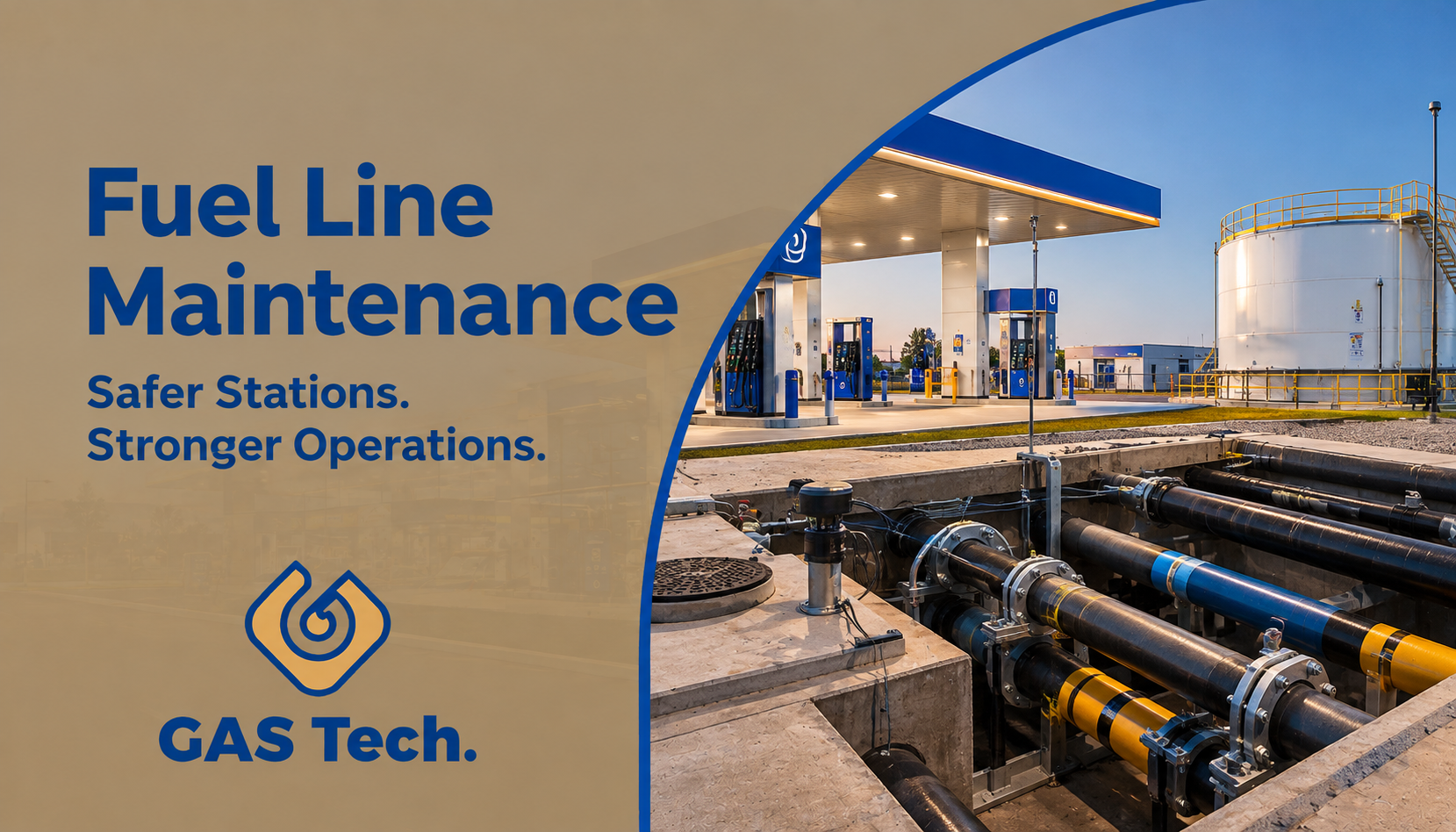
Fuel line maintenance

Fuel line maintenance at a gas station, featuring underground fuel pipes and infrastructure, with the text “Fuel Line Maintenance – Safer Stations. Stronger Operations.” and GAS Tech. branding.

Operating commercial gas stations and industrial sites requires constant attention to safety, environmental protection, and fuel asset control. Behind every fuel dispenser and bulk storage tank lies a complex network of underground and aboveground piping. Without proper upkeep, even a minor pipe leak or valve defect in these systems can lead to severe environmental contamination, sudden fuel loss, and heavy regulatory fines.

Prioritizing regular fuel line maintenance safeguards your facility, keeps product delivery smooth, and ensures full compliance with Saudi environmental and safety standards.

What Is Fuel Line Infrastructure and Why Does It Matter?

In gas stations and industrial facilities, fuel lines are specialized double-walled pipes or flexible conduits that transfer gasoline and diesel from bulk underground storage tanks directly to surface dispensers. These systems are part of the wider Fuel Station Infrastructure Requirements needed to support safe and reliable station operations. Because fuel travels through these pipes under continuous pump pressure, every fitting, elbow, and containment sump must remain completely leak-proof.

These lines connect critical forecourt hardware, including submersible turbine pumps (STPs), emergency shear valves, and automatic tank gauges. If a fuel pipe experiences structural stress or corrosion, fuel flow degrades, risking both operational safety and profitability.

Keep your pipe network operating at peak performance. Discover how GasTech digitizes pressure monitoring across your entire site. 

Core Benefits of Routine Fuel Line Maintenance

Investing time in preventive fuel line maintenance offers essential operational advantages for facility managers:

  • Prevents Environmental Hazards: Catching pipe stress early prevents fuel from leaking into the surrounding soil or underground water supplies.
  • Reduces Costly Fuel Losses: Eliminating small pressure leaks ensures every gallon pumped from bulk storage reaches the end customer without unaccounted volume loss.
  • Extends Station Lifespan: Protecting underground piping from rust, vapor locks, and seal degradation keeps forecourt assets working longer.
  • Avoids Sudden Shutdowns: Scheduled inspections prevent sudden station downtime caused by pipe ruptures or pressure valve failures.

Prevent environmental risks and eliminate fuel loss before it hits your bottom line. Partner with GasTech for reliable station protection. 

Common Signs Your Station Piping Needs Inspection

Before a fuel pipe failure stops your daily operations, your forecourt equipment usually shows clear warning signals:

  • Unexplained Fuel Volume Drops: An imbalance between fuel drawn from tanks and volume sold through dispensers often indicates an underground pipe leak.
  • Fuel Vapors or Liquid in Containment Sumps: Finding fuel or heavy vapor inside dispenser sumps or STP pits indicates a loose fitting or cracked pipeline.
  • Slow Dispenser Flow Rates: If fuel pumps operate noticeably slower than usual, a clogged pipe filter or fuel line obstruction may be restricting fluid flow.
  • Frequent Pressure Alarms: Continuous pressure drops reported by your leak detection system mean the pipe network is failing to hold pressure

Essential Steps for Effective Fuel Line Maintenance

Taking a structured approach to fuel line maintenance helps station operators avoid catastrophic failures. Best practices include:

  1. Perform Pressure & Line Leak Testing: Regularly conduct precision line leak detection tests to verify that underground piping maintains proper pressure under operating conditions.
  2. Inspect Dispenser & Tank Sumps: Check containment sumps monthly to clear out water, debris, or fuel residue that can corrode pipe fittings over time.
  3. Verify Emergency Valves & Pipe Joints: Verify that emergency shut-off valves and flexible pipe joints remain functional and free from physical stress.
  4. Clean & Replace Line Strainers: Clean fuel filters and inline strainers regularly to remove sediment before it restricts fluid movement.
  5. Monitor Cathodic Protection Systems: Ensure rust prevention systems on metallic pipes are functioning properly to avoid pipe corrosion.

Simplify your daily forecourt maintenance routine. Schedule a consultation with GasTech to streamline your site operations. 

Integrating Fuel Line Maintenance with GasTech Smart Solutions

While manual inspections are essential, modern commercial fleets rely on digital monitoring to manage system health efficiently. A Fleet Fuel Management System can also connect fuel usage, vehicle activity, and dispensing data with broader operational controls. Combining physical fuel line maintenance with the GasTech ecosystem provides complete control over your fuel operations.

1. Predictive Maintenance and Engine Diagnostics

GasTech reads real-time engine computer data to track fuel consumption rates and engine hours. If a damaged hose causes a sudden pressure drop or abnormal fuel burn, the platform automatically generates diagnostic alerts so technicians can schedule preventive fuel line maintenance before a complete breakdown occurs.


2. Real-Time Leak and Theft Detection

GasTech utilizes advanced tank level sensors and flow monitors through its Fuel Tank Monitoring System in Saudi Arabia to track fuel volumes continuously. If a fuel line leaks or is disconnected intentionally, the system immediately sends instant alerts via SMS or pop-up notifications, allowing managers to stop fuel loss right away.


3. Automated RFID Fuel Dispensing

By using an RFID Fuel Management System and attaching GasTech RFID tags to authorized vehicles, pumps open automatically only for registered assets. This ensures clean, controlled refilling while recording every gallon dispensed to prevent unauthorized siphoning or fuel mixing.


Ready to upgrade to real-time leak alerts and automated inventory matching? Request a live GasTech system demo now. 


How Technical Training Enhances Fuel Line Maintenance Safety

Proper fuel line maintenance requires skilled technicians who understand safety protocols and international industry standards. Dealing with pressurized fuel systems involves volatile fluids, making proper training vital for reducing workplace accidents.


GasTech provides specialized professional training programs aligned with international standards such as API 570 (Piping Inspection and Maintenance) and ISO 45001 (Occupational Health and Safety). Training your technical team ensures:


  • Quick and accurate diagnosis of fuel line leaks and pressure faults.
  • Compliance with local health, safety, and environmental standards.
  • Safe handling of hazardous materials during maintenance procedures.
  • Accurate training record documentation to meet Saudi Arabia’s “Qiwa” platform compliance requirements for private sector enterprises.

Selecting the Right Hardware for Long-Term Fuel Line Maintenance

Building a durable fuel delivery system depends heavily on selecting the correct piping hardware for your site:

Station Application Recommended Hardware Key Benefit
Underground Piping (Forecourt) Double-walled flexible polyethylene (HDPE) piping Resists ground movement, avoids corrosion, and offers secondary leak containment
High-Risk Connection Points Stainless steel flex connectors & shear valves Provides mechanical flexibility and shuts off fuel flow instantly during collisions
Underground Sumps & Pits Corrosion-resistant fiberglass containment sumps Keeps groundwater away from fuel lines and catches internal pipe leaks safely

Pairing high-quality forecourt hardware with regular fuel line maintenance guarantees reliable fuel delivery and long-term peace of mind.

Upgrading your station’s piping hardware? Talk to GasTech consultants to select the durable components built for your exact operational needs. 

Conclusion

Proactive fuel line maintenance is a critical operational practice that protects gas stations and industrial facilities from fuel loss, environmental risks, and costly downtime. By identifying pipe leaks early, inspecting sumps regularly, and utilizing GasTech’s automated Remote monitoring and management tools, business owners maintain complete forecourt control.

Contact our technical consultation team today to learn how GasTech can help digitize your station operations, automate maintenance alerts, and secure your fuel infrastructure!

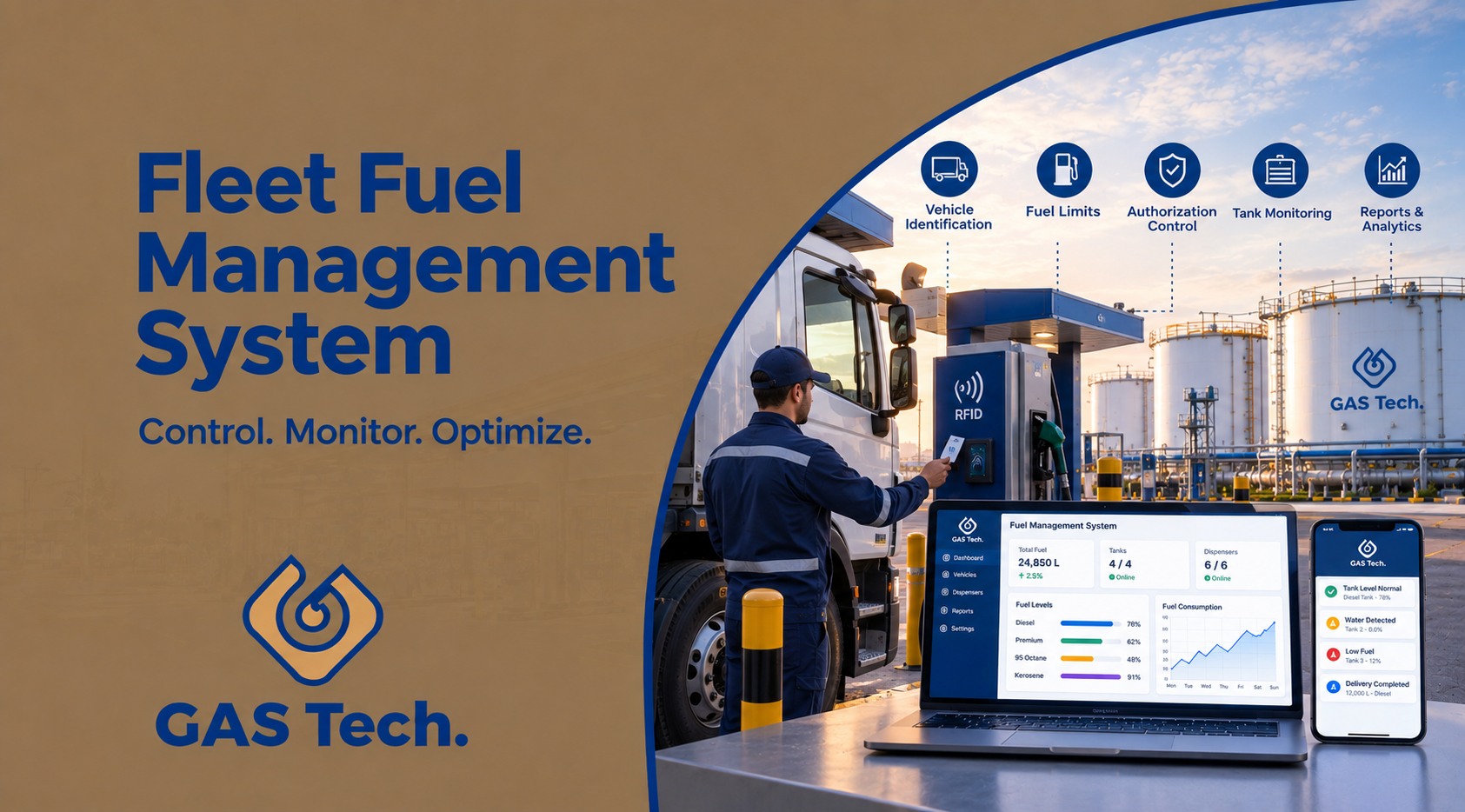
Fleet Fuel Management System

Fleet fuel management system at an industrial fuel station, showing a truck, RFID fuel identification, storage tanks, fuel dispensers, and digital dashboards for vehicle authorization, fuel limits, tank monitoring, and analytics.

A Fleet fuel management system helps factories, transport companies, and other businesses control fuel supplied to company vehicles. It replaces paper records with a connected process that identifies vehicles, applies approved fuel limits, and records dispensing. Managers can also monitor tanks and activity through one platform.

GasTech provides an integrated solution for internal fuel stations in Saudi Arabia. It connects RFID identification, dispensers, tanks, inventory data, and reports. This guide explains how it works, its equipment and benefits, and GasTech’s role.

What Is a Fleet Fuel Management System?

A Fleet fuel management system combines hardware and software to control and record fuel supplied to vehicles or equipment. It is useful for private stations operated by factories, logistics companies, construction businesses, farms, and large facilities.

The system identifies a vehicle before fuel is released. It checks whether the vehicle is approved and whether it has an available daily or monthly allowance. If the request is accepted, the dispenser starts. When the approved quantity is reached, dispensing stops and the transaction is saved.

Unlike GPS tracking or fuel cards, GasTech focuses on controlling fuel at the company’s own station and connecting each transaction to an approved vehicle.

Contact GasTech to discuss your fleet, tanks, dispensers, and reporting needs and receive a solution designed for your site.

How a Vehicle Fuel Dispensing System Works

The vehicle fuel dispensing system starts when a vehicle reaches the pump. An RFID tag allows the system to identify it automatically. This identification process is part of the RFID Fuel Management System, which connects vehicle records with fueling authorization and consumption control. The platform then checks the vehicle record, fuel type, available allowance, and rules set by the business.

The process normally includes:

  1. The RFID reader identifies the vehicle.
  2. The system confirms that it is authorized.
  3. The dispenser opens within the approved limit.
  4. Fuel is supplied to the vehicle.
  5. Dispensing stops at the selected quantity.
  6. The transaction is recorded immediately.

This reduces manual work and helps prevent supply to unknown vehicles. GasTech links the activity to a central dashboard for direct review.

Main Parts of the Fuel Management Solution

A dependable Fleet fuel management system needs connected field equipment and software. It may include:

  • RFID tags and readers for vehicle identification.
  • A forecourt controller for pump operations.
  • A dispenser converter for communication with pumps.
  • Fuel dispensers and measuring equipment.
  • Sensors for monitoring tank levels.
  • A network connection and central dashboard.
  • User permissions, reports, and alerts.

GasTech supplies and connects this equipment as part of its Fuel Station Automation System Saudi Arabia, allowing pumps, tanks, inventory, and management systems to exchange data. The final list depends on the site.

Control Fuel Limits for Every Vehicle

One important function of a Fleet fuel management system is managing allowances. A business can define a daily or monthly fuel limit for each vehicle. Different rules may be applied to trucks, service cars, buses, or heavy equipment based on their work.

When a vehicle reaches its limit, the system stops further dispensing according to the approved settings. Managers can also block a vehicle that is no longer active or allowed to use the station. Every completed event is recorded with details such as the vehicle, date, time, quantity, and dispensing point, depending on the system setup.

These records help compare vehicle consumption, investigate changes, and apply one approval process across the fleet.

Connect Vehicle Dispensing with Tank Monitoring

Vehicle control is only one part of fuel management. The company must also know how much fuel is available in its tanks. GasTech connects tank monitoring sensors with the central platform to provide live visibility of fuel levels through its Fuel Tank Monitoring System in Saudi Arabia.

Our GasTech system can record quantities added during delivery, monitor water and tank temperature, and send alerts when fuel reaches a set level. Available functions depend on the sensors and system configuration selected for the project.

Connecting tank data with a vehicle fuel dispensing system allows managers to compare received fuel, dispensed fuel, and the remaining balance. A difference does not always prove theft or leakage, but it gives the technical team a clear reason to review records, equipment, and tank conditions.

Reports That Support Daily Decisions

A Fleet fuel management system turns separate fueling events into organized information. Managers can review consumption by vehicle, time, station, or another available field instead of collecting paper forms.

Useful reports and alerts can cover:

  • Fuel supplied to each vehicle.
  • Total consumption during a selected period.
  • Vehicles that reached their limits.
  • Attempts by unauthorized vehicles.
  • Current tank levels and low-stock warnings.
  • Fuel delivery and dispensing records.
  • Unusual consumption that needs review.

These reports support fuel purchasing, stock planning, and internal control. They provide a digital record of which vehicle received fuel, when the transaction happened, and how much was supplied.

Integration with ERP and Inventory Systems

Fuel data becomes more useful when it supports the wider business process. GasTech provides integration options for pumps, inventory management, tank monitoring, point-of-sale functions, and ERP systems. The exact scope is defined after the existing hardware and software are reviewed.

With a connected Fleet fuel management system, teams can review delivery, tank balance, and vehicle dispensing data in one environment. GasTech can also adapt software functions for specific approvals, reports, or internal links.

How GasTech Implements the System

GasTech begins by studying the vehicles, tanks, dispensers, fuel types, and operating locations. The team also reviews how vehicles are approved, how limits are set, and which reports are required.

Implementation may include:

  1. Site and operational assessment.
  2. Selection of compatible hardware and software.
  3. Supply and connection of controllers, readers, tags, and sensors.
  4. Integration with pumps, tanks, inventory, or ERP as required.
  5. Creation of vehicle records and fuel limits.
  6. Testing identification, authorization, dispensing, and stopping.
  7. User training, commissioning, and technical support.

This approach ensures the vehicle fuel dispensing system is designed around the real operation, rather than supplied as a fixed package that may not fit the site.

Why Choose GasTech?

GasTech covers the internal fueling process as a connected operation. Its services include equipment supply and connection, station automation, RFID identification, fuel limits, tank monitoring, inventory management, central dashboards, ERP integration, preventive maintenance, and technical support.

This makes the Fleet fuel management system useful at both pump and management levels. Vehicles receive fuel under controlled rules, while managers receive the records and alerts needed to supervise the operation.

Take Control of Fleet Fuel with GasTech

GasTech provides a Fleet fuel management system for internal stations in factories and companies across Saudi Arabia. This Fleet fuel management system brings RFID control, pump connection, tank monitoring, and central reporting into one environment, giving the business a clearer view of fuel from storage to final dispensing.

Contact GasTech today to request an assessment and build a vehicle fuel dispensing system that matches your fleet, site, and fuel control requirements.

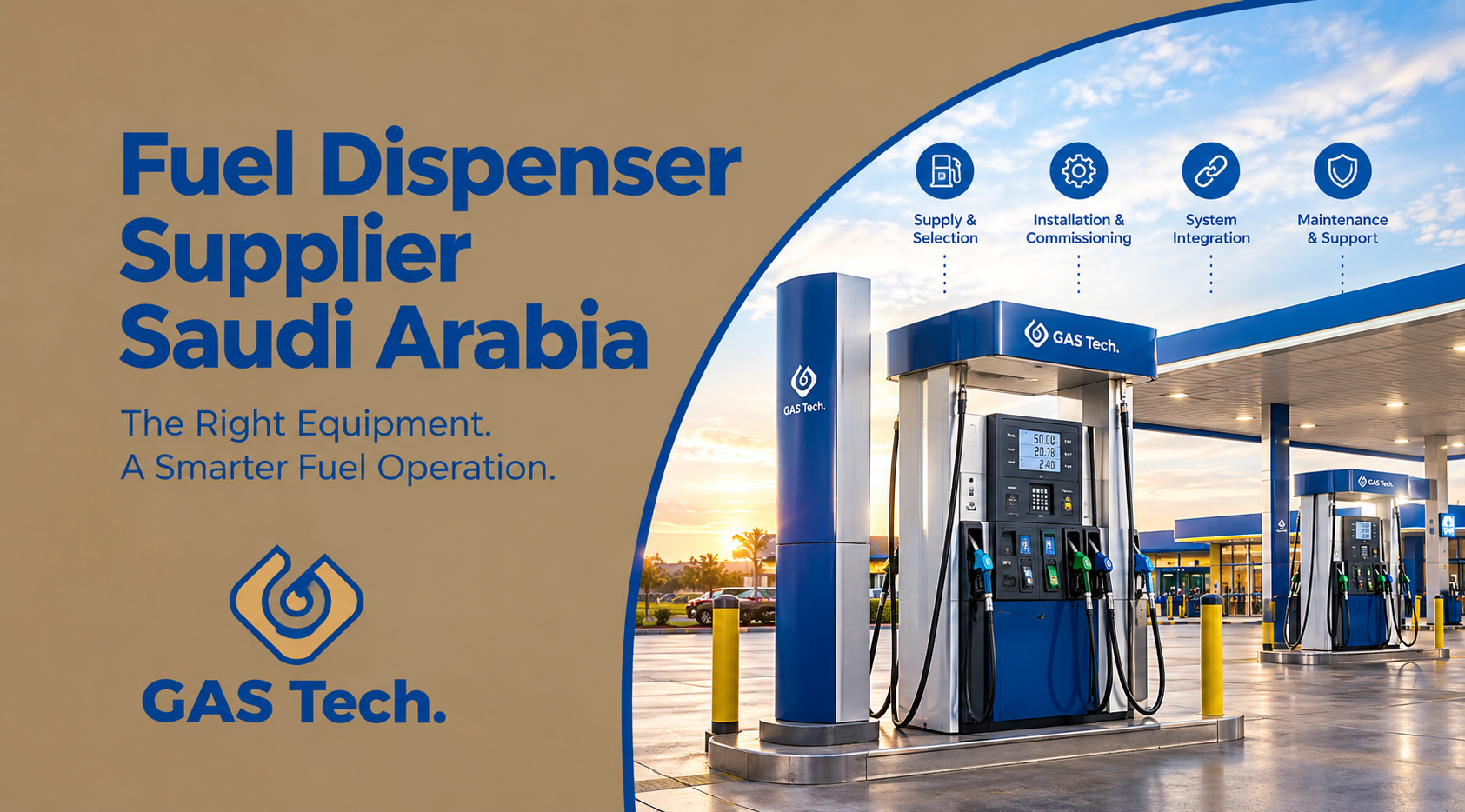
Fuel Dispenser Supplier Saudi Arabia

**Alt Text:** Fuel dispenser supplier in Saudi Arabia providing fuel dispensers with installation, system integration, commissioning, maintenance, and support for modern fuel stations.

Choosing the right fuel dispenser supplier is an important decision for any fuel station, factory, or fleet facility. The dispenser must deliver the correct fuel, support the required flow rate, work with the site infrastructure, and connect with sales and management systems. A poor choice can lead to slow service, difficult maintenance, inaccurate records, or costly replacement work.

GasTech supplies and connects fuel dispensers for new stations, upgrade projects, and private fuel facilities in Saudi Arabia. We do more than provide equipment. Our team studies the site, helps select the right configuration, connects the dispenser to station systems, and supports commissioning and maintenance. 

In this guide, we explain what a fuel dispenser supplier should provide, how to choose the right equipment, and how GasTech builds a connected fuel operation.

What Does a Fuel Dispenser Supplier Provide?

A professional fuel dispenser supplier should help the customer choose equipment that matches the real operating need. This includes the fuel type, expected traffic, number of fueling points, required flow rate, payment method, and available space. The service may also cover delivery, installation, testing, calibration support, system connection, training, spare parts, and technical support.

The dispenser combines electronic controls with parts that measure and control fuel flow. GasTech reviews them as one system to reduce compatibility problems.

Contact GasTech to share your station requirements and receive a suitable dispenser supply and integration proposal.

Choosing a Fuel Pump Supplier for Your Project

A fuel pump supplier should not recommend one model for every site. A busy public station has different needs from a factory that fills trucks at fixed times. Before choosing equipment, consider:

  • Petrol, diesel, or multiple fuel products.
  • The number of hoses and nozzles required.
  • Normal or high-flow dispensing.
  • Single-sided or double-sided vehicle access.
  • Display, keypad, and receipt requirements.
  • Compatibility with controllers and point-of-sale systems.
  • Local maintenance and spare-parts needs.
  • Site layout and future expansion.

GasTech studies these requirements before proposing a configuration. As a fuel dispenser supplier, we can coordinate the equipment with tanks, fuel piping, electrical connections, station automation, and central reporting. This gives the project a clearer technical scope from the start.

Petrol and Diesel Fuel Dispenser Options

Petrol dispensers often need clear displays, accurate metering, reliable nozzles, and communication with payment and management systems. The unit may include several hoses and products.

Diesel sites often need durable equipment and suitable flow for trucks, buses, or heavy machinery. High flow can reduce filling time, but the tanks, pipes, meters, hoses, and nozzles must support it.

A capable fuel pump supplier should confirm these details instead of selecting equipment only by price. GasTech provides petrol and diesel solutions for commercial stations and internal fleet facilities, with each system chosen around the customer’s operation.

Fuel Dispenser Supplier Saudi Arabia: Key Requirements

When searching for a fuel dispenser supplier Saudi Arabia businesses should check equipment conformity, project documentation, installation quality, and after-sales support. The selected dispenser and its measuring system must meet the requirements that apply to the project, including current Saudi standards and instructions from the relevant authorities as part of the Saudi Fuel Station Licensing Process.

GasTech supplies fuel dispensers from international and local manufacturers in line with applicable SASO requirements. Final compliance depends on the approved model, certificates, installation, inspection, and calibration process. For this reason, project documents should list the dispenser model, technical data, certificates, interfaces, and testing scope before purchase.

The review should also cover electrical safety, emergency controls, nozzle shut-off, and maintenance access under the approved engineering design.

Supply, Installation, and Commissioning

The supplier’s work should continue after delivery. Correct installation depends on the prepared base, fuel lines, power, grounding, communication cables, safety devices, and access for future service, all of which should be considered within the Fuel Station Infrastructure Requirements.

GasTech supports Fuel Dispenser Installation and connection as part of its wider fuel-station solutions. A typical process includes:

  1. Reviewing the site layout and approved drawings.
  2. Confirming the dispenser model and connection points.
  3. Checking bases, piping, power, and communication routes.
  4. Positioning and securing the equipment.
  5. Connecting fuel, electrical, control, and data systems.
  6. Testing operation and communication.
  7. Supporting calibration and commissioning.
  8. Training the station team and handing over records.

During replacement work, the team also studies the existing infrastructure to reduce unnecessary disruption.

Smart Station Integration from GasTech

Modern dispensers should not operate as isolated machines. GasTech connects them with forecourt controllers, dispenser converters, point-of-sale systems, tank monitoring, inventory management, and central dashboards through a Fuel Station Automation System Saudi Arabia.
Our
equipment supply and connection service helps turn field equipment into a connected operating environment.

This integration allows users to compare sales, pump, and tank data, reduce manual entry, and investigate differences. GasTech can also connect station data with ERP platforms.

For private fleet stations, RFID can identify approved vehicles, apply daily or monthly limits, record transactions, and stop delivery at the approved quantity.

Why Choose GasTech as Your Fuel Dispenser Supplier?

Choosing a fuel dispenser supplier is not only about purchasing equipment. It also requires engineering support, system compatibility, safe installation, commissioning, and reliable support after delivery. GasTech provides integrated solutions for new fuel stations, replacement projects, factories, and private fleet facilities across Saudi Arabia.

Compliance with Saudi Requirements

GasTech supplies petrol and diesel dispensers from international and local manufacturers, selected according to the technical needs of each project and the applicable SASO requirements. 

We review equipment certificates, metering systems, electrical safety, automatic shut-off components, and compatibility with the approved station design. Final testing and calibration are completed according to the required inspection and commissioning process.

Safety and Reliable Operation

Safety is considered during equipment selection, installation, and system connection. Depending on the project requirements, the solution may include emergency controls, automatic nozzle shut-off, vapor recovery compatibility, leak-monitoring connections, and electrical components suitable for the operating environment. 

Preventive maintenance and technical support also help reduce unexpected faults and maintain reliable performance.

Smart Automation and Payment Integration

We do not supply dispensers as isolated machines. GasTech can connect them with:

  • Forecourt controllers and dispenser converters.
  • Point-of-sale and station management systems.
  • Cash, bank card, and supported mobile payment options.
  • RFID vehicle identification and fuel allowance controls.
  • Tank monitoring and inventory management systems.
  • Central dashboards and ERP platforms.
  • Electronic invoicing systems based on the approved project scope and applicable ZATCA requirements.

Solutions for New and Existing Stations

GasTech provides equipment for newly developed stations and dispenser replacement projects. Before installation, our team reviews the existing tanks, piping, electrical connections, controllers, and software interfaces. This helps us recommend compatible equipment and plan replacement work in a way that limits unnecessary disruption to station operations.

By combining equipment supply, installation, automation, safety, monitoring, preventive maintenance, and technical support, GasTech provides a complete solution designed around the operating needs of each site.

Conclusion 

The right fuel dispenser supplier Saudi Arabia should understand the site, select compatible equipment, define installation and testing, and support the system after handover.

GasTech delivers a connected solution for petrol stations, industrial sites, and fleet facilities. Whether you need new dispensers or want to replace and automate existing equipment, our team can assess the project and recommend a practical configuration.

Contact GasTech today to request a technical consultation and quotation from a supplier that connects equipment, automation, monitoring, and support in one solution.

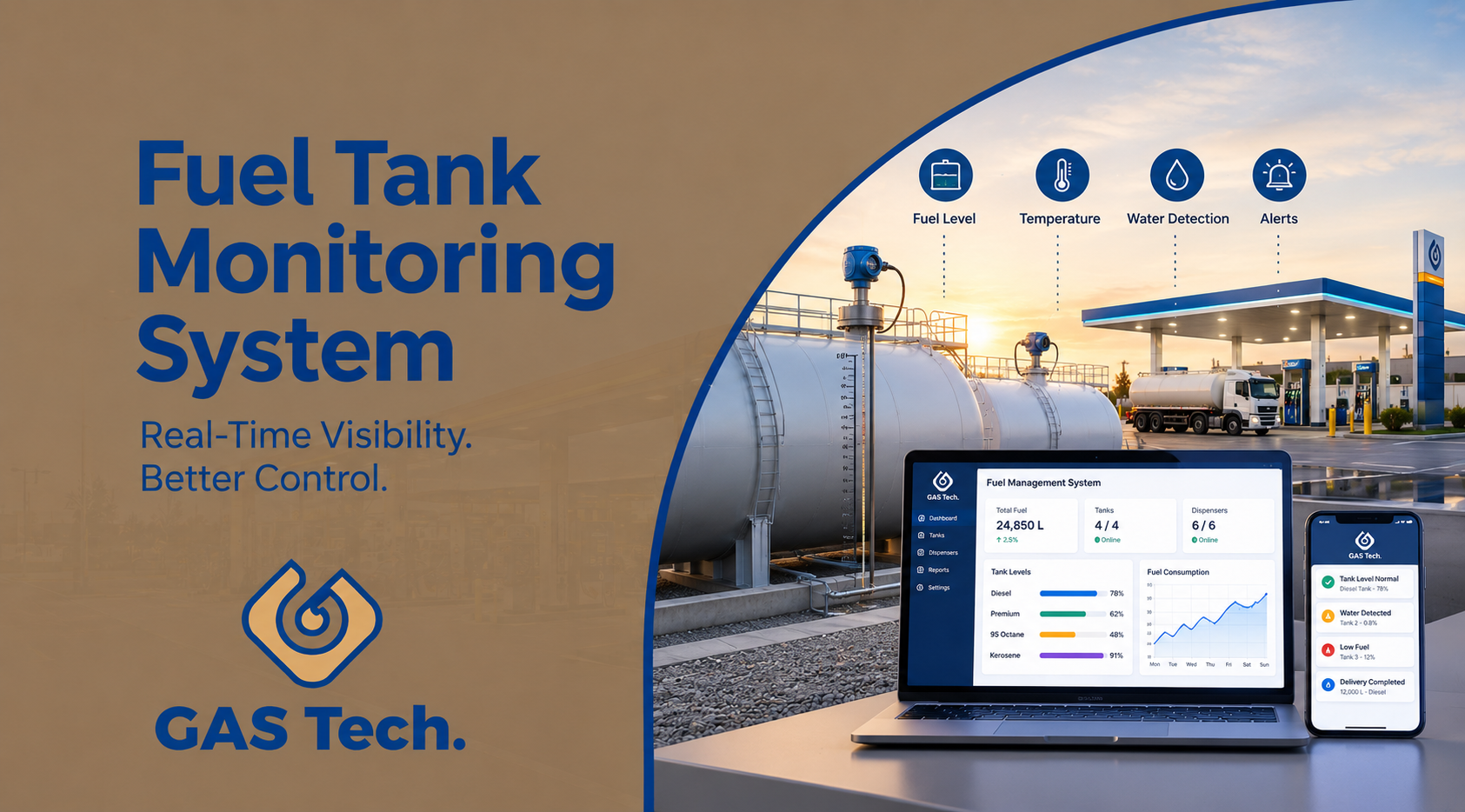
Fuel Tank Monitoring System in Saudi Arabia

Fuel tank monitoring system with automated fuel level sensors, tank monitoring technology, and real-time fuel management dashboard for Saudi Arabia.

Operating commercial fuel stations, industrial sites, and private fleets across the Kingdom of Saudi Arabia requires precision, safety, and strict regulatory compliance. Managing fuel assets manually opens the door to hidden financial losses, human errors, unrecorded transactions, and undetected leaks. Extreme ambient temperatures also Worsen fuel vaporization, further complicating inventory control.


Implementing a modern fuel tank monitoring system solves these operational challenges by replacing manual estimates with real-time, automated data. By integrating specialized hardware with cloud-based software, fuel station owners and fleet managers can track every drop of fuel from bulk delivery to final consumption.


What is a Modern Fuel Tank Monitoring System?

A modern fuel tank monitoring system is an end-to-end technological infrastructure designed to automate liquid inventory management in underground and aboveground storage tanks. Rather than relying on periodic manual checks, this system continuously captures, processes, and transmits critical tank metrics directly to a centralized management platform.


At its core, the Fuel Tank Monitoring System acts as a bridge between physical forecourt hardware and digital enterprise resource planning (ERP) software. Through automated data logging, managers gain absolute visibility into current fuel volumes, delivery reconciliation, and operational anomalies—eliminating manual record-keeping errors entirely.


Core Components: From Hardware to Cloud Software

A robust fuel management setup relies on a synchronized ecosystem of hardware and software components working in unison:


1. Field Sensors & Measuring Probes

Accurate measurement starts inside the tank. Installing a high-precision fuel level sensor for tank environments allows operators to continuously measure liquid levels, temperature shifts, and water accumulation. Advanced fuel level sensor for tank utilize capacitive technologies to detect even fractional millimeter changes in liquid height.


2. Automatic Tank Gauge (ATG) Consoles

An automatic tank gauge system serves as the central hardware controller on-site. The ATG console receives signals directly from the tank probes, calculates real-time volumes using custom tank calibration curves, and triggers immediate visual or audible alarms if liquid anomalies occur.


3. Forecourt Controllers & Dispenser Converters

To prevent unauthorized fuel flow, forecourt controllers and dispenser converters bridge the gap between the ATG console, fuel pumps, and point-of-sale (POS) systems. This ensures pumps remain locked until a valid transaction or identification signal is authorized.


4. Centralized FMS & ERP Software

Cloud-based software aggregates field data into real-time dashboards. Platforms like GasTech process this raw data to generate automated inventory reports, track vehicle consumption trends, and facilitate seamless enterprise resource planning. When tank inventory data is connected with transaction and payment records, operators gain a more complete view of station performance through an integrated Fuel station POS system.

Integrating ATG Consoles with Forecourt Automation

An automatic tank gauge system achieves maximum value when fully integrated into total forecourt automation. When an ATG console communicates directly with dispenser controllers and RFID readers, it creates a connected fueling environment where tank levels, dispensing activity, and vehicle identification can be monitored together. For stations looking to automate fuel dispensing operations, an Automated fuel dispensing system can help connect these processes and improve control over fuel distribution:


  1. A vehicle arrives at the pump, and its RFID tag is automatically scanned.
  2. The system verifies the vehicle’s pre-approved fuel quota.
  3. The forecourt controller signals the dispenser to open fuel flow.
  4. The ATG console continuously cross-references dispensed volume against live tank drawdown.
  5. Transaction details, invoice generation, and remaining inventory update automatically in real time.


Key Benefits of Implementing a Fuel Tank Monitoring System

Deploying an automated fuel tank monitoring system transforms reactive fuel management into a proactive, data-driven operation. This type of monitoring also plays an important role in automated station operations, where tank data needs to work alongside dispensing, payment, and security systems. A Smart Self Service Fuel Station System can bring these technologies together to support more efficient and controlled fueling operations:


  • Eradication of Theft: Automated authorization protocols prevent unauthorized fuel dispensing or under-filling during bulk supplier deliveries.
  • Precise Leak Detection and Water Sensing: Built-in fuel level sensors for tank setups feature bulk water detection to identify underground water Entry or fuel leaks before they cause environmental damage.
  • Continuous Offline & Online Operation: Advanced local controllers maintain full forecourt automation and transaction logging during internet outages, syncing data automatically once connectivity returns.
  • Fleet Consumption Automated GPS tracking: Integrating RFID technology links specific vehicles directly to pump dispensers, tracking mileage, engine hours, and exact fuel consumption per asset.

Actionable Analytics and Intelligent Security Alerts for Fuel Fleet Operations

A modern fuel tank monitoring system does much more than just read tank levels; it helps you control your fuel and protect your vehicles from anywhere using one simple dashboard.

Key Features and Daily Benefits:

  • Detailed Fuel Reports: Track exact refill times, locations, and volumes, alongside Fuel efficiency reports, to see how efficiently your vehicles use fuel.
  • Instant Theft & Drain Alerts: Get immediate notifications via SMS or pop-ups if fuel is drained or if a sensor wire is disconnected intentionally.
  • Driver Safety: Set safe zones on the map for your fuel trucks and receive alerts if a vehicle goes off-route, speeds, or makes an unauthorized stop.
  • Fuel Quality Sensors: Advanced fuel level sensors for tank setups automatically check fuel quality and send alerts if fuel is mixed with water or bad additives.
  • Automated Refill Requests: Prevent sudden fuel outages by automatically triggering refill requests when tanks drop below safety limits.

Using these smart tools in fuel tank monitoring Saudi Arabia operations helps fleet owners cut unnecessary costs, protect their fuel assets, and keep their automatic tank gauge system running safely every day.

Why Fuel Tank Monitoring in Saudi Arabia is Essential for Compliance

Deploying fuel tank monitoring Saudi Arabia solutions is no longer just an operational preference—it is a regulatory necessity. Facilities operating fuel storage tanks across the Kingdom must comply with strict frameworks established by the Ministry of Energy, the Civil Defense, and the Saudi Standards, Metrology, and Quality Organization (SASO).


Furthermore, a modern fuel tank monitoring system integrates directly with electronic invoicing requirements mandated by the Zakat, Tax, and Customs Authority (ZATCA). Automated data capture ensures that all fuel sales, tax reconciliations, and inventory audits strictly adhere to Saudi governance standards.


Streamlining Fleet & Fuel Management with Gastech Solutions

Implementing fuel tank monitoring Saudi Arabia infrastructure requires a partner capable of delivering both engineering expertise and advanced software development. The specialized GasTech platform provides complete end-to-end automation solutions tailored for commercial gas stations, industrial plants, and private corporate fleets.

GasTech covers every stage of the transformation—from initial site design and hardware supply (ATG consoles, forecourt controllers, dispenser converters, and RFID systems), to seamless cloud software integration, hands-on technical training, and 24/7 technical support.

Conclusion

Unmonitored fuel inventory exposes businesses to financial drain, unaccounted losses, and compliance risks. Investing in a modern fuel tank monitoring system provides absolute forecourt control, safeguards assets against theft, and ensures strict alignment with Saudi Arabia’s regulatory standards.


Contact the gastech engineering team today to request a customized technical consultation and digitize your fuel operations.

Fuel station POS system

The fuel retail sector is undergoing a massive digital transformation. Managing a modern service station requires much more than simply pumping gas and collecting cash. Station owners and industrial facility managers face complex operational challenges—from inventory reduction and price fluctuation to strict regulatory mandates. 

Implementing an advanced fuel station POS system has evolved from an operational upgrade into a vital strategic necessity for businesses aiming to thrive in today’s competitive market.

A specialized point-of-sale platform streamlines everyday checkout workflows while seamlessly connecting backend operations with forecourt hardware. By integrating pumps, underground storage tanks, and payment terminals, a robust fuel station payment system enables real-time tracking, eliminates manual errors, and drives long-term profitability.

What Is a Fuel Station POS System and How Does It Work?

At its core, a fuel station POS system is an integrated software and hardware solution specifically engineered to handle transactions both at the pump (forecourt) and inside the convenience store (c-store). Unlike generic retail registers, a point-of-sale platform designed for fuel retail directly interfaces with dispensers, automatic tank gauges (ATG), and price signs.


Modern POS platforms operate digitally across internet-enabled devices, touch terminals, and mobile tablets. The transaction flow follows a structured process:

  • Transaction Initiation: The customer selects a fuel type at the dispenser or brings items to the c-store counter. The system fetches exact pricing and volume directly from the pump meter.
  • Automated Calculation & Taxing: The software calculates the total balance, including applicable taxes, and updates inventory counts instantly.
  • Payment Processing: The customer pays via credit card, contactless NFC tap, mobile wallets, RFID tags, or cash. 
  • Data Synchronization: Transaction details generate a digital receipt, update local records, and push operational metrics directly to head office management dashboards.

Key Benefits of Implementing a Fuel Station Payment System

Deploying a dedicated fuel station payment system delivers transformative advantages across all levels of management, fundamentally elevating both operational control and customer satisfaction.

1. Operational Automation and Error Reduction

Automating pump-to-register data flows eliminates human error caused by manual entry. The system captures precise fuel volumes, cash values, and shift readings directly from the dispenser, accelerating shift handover procedures and preventing stock discrepancies.

3. Remote Price Updating

Fuel pricing often changes based on regional classifications or regulatory updates. An intelligent POS network allows operators to update fuel prices across pumps and digital billboard price displays remotely—whether the station is located within the city, on rural highways, or across distributed regional sites.

4. Customer Loyalty and Digital Engagement

Modern payment ecosystems boost consumer retention through integrated loyalty schemes. Station mobile apps provide consumers with motivated purchase rewards, real-time product pricing, operating hours, nearby station locations, and direct feedback portals.

Take full control of your fuel sales and eliminate losses with our smart fuel station POS system. Contact GasTech Today to Get Started.

GasTech: The Next-Generation Fuel Station POS System

When evaluating forecourt technology, GasTech stands out as a market leader, offering an AI-powered, IoT-driven Cloud ERP ecosystem through its Fuel station ERP system Saudi Arabia, tailored specifically for fuel station management and industrial fueling operations.

Direct Pump Integration and Real-Time e-Invoicing

The GasTech fuel station POS system gathers pricing and volume metrics directly from the dispenser without manual intervention. It immediately generates standardized electronic invoices linked directly to the pump transaction, automatically transmitting e-invoices and detailed shift reports to central management.

ZATCA Compliance and Tax Integration

Compliance with official tax mandates is built into the core of GasTech. The platform fully complies with the ZATCA (Zakat, Tax and Customs Authority) electronic invoicing regulations. 

It creates fully compliant e-invoices per transaction and seamlessly links them to the company’s core accounting modules for automated bank reconciliations and accurate financial auditing.

Uninterrupted Offline Operations

Internet instability should never stop fuel sales. GasTech features an offline-first architecture that securely stores all pump movements, transaction records, and shift readings on a local station database during connectivity outages. Once the connection is restored, all accumulated data automatically synchronizes with head office servers without data loss.

Automated Shift Closing

GasTech simplifies shift transitions by taking opening and closing readings directly from the pump meters. The system automatically reconciles cash, card, and digital transactions per shift, forwarding individual shift summaries straight to headquarters.

RFID Fleet Fueling and Fleet Automation

For industrial facilities and corporate fleets, GasTech leverages the RFID fuel management system to automate vehicle identification, fueling authorization, and transaction tracking. When a vehicle approaches the pump, an RFID Tag automatically identifies the vehicle, verifies authorization, and dispenses fuel strictly within pre-approved limits—recording every gallon without human involvement.

Upgrade your forecourt today with GasTech’s fuel station POS system for fast, reliable, and 100% ZATCA-compliant operations. 

Why GasTech Is the Ideal Fuel Station POS System in Saudi Arabia

Selecting the right technological partner determines the long-term efficiency and scalability of your fuel station network. GasTech provides an end-to-end framework built to satisfy strict local regulations while maximizing return on investment.

  • Energy Ministry Compliance: Engineered in full accordance with the qualification standards and technical specifications set by the Ministry of Energy.
  • Full ZATCA Phase Integration: Ensures seamless generation, storage, and clearing of e-invoices directly from the point of sale.
  • Cost Reduction & Efficiency: Reduces reliance on manual labor, eliminates cash leakage, and streamlines daily administrative overhead.
  • Turnkey Infrastructure Support: Beyond software, GasTech offers complete infrastructure execution—including forecourt controllers, dispenser converters, tank sensors, civil works, and canopy installations.

Investing in an intelligent, automated fuel station POS system is the most effective way to protect fuel inventory, streamline financial accounting, and ensure total compliance with national regulations. GasTech provides the complete hardware, software, and engineering framework needed to transform your traditional fuel station into a fully automated, future-proof digital operation.

Contact Our Engineering Team Today, request a live demo and discover how GasTech can secure your inventory, eliminate fuel losses, and maximize your operational efficiency.

Smart Self Service Fuel Station System

Fuel retailing in Saudi Arabia and the GCC is undergoing a rapid digital transition toward Smart Fuel Station Technology, speed, automation, and less dependence on manual work. An automated self service fuel station has quickly become a critical operational standard for today’s forecourt.

The self-service fuel stations help in 24/7 operations and avoid manual errors and cash leakage by offering drivers the ability to pay and refuel independently through smart touchscreens, RFID tags, and mobile apps. Lower overhead and stringent ZATCA compliance benefit station owners, while faster service and zero queue delays benefit drivers, creating a highly profitable win-win ecosystem.


What Is a Self Service Fuel Station and How Does It Work? 

A self service fuel station is an automated fueling facility where drivers independently initiate, authorize, and complete their fueling transactions without relying on station attendants. Driven by smart forecourt technology, these stations streamline operations, shorten wait times, and guarantee precise control over fuel dispensing.

The GasTech system supports four flexible payment and activation methods to power a seamless self service fuel station experience:

  • Mobile App & QR Scanning

The customer recharges their digital wallet via the GasTech mobile app, generates a secure QR code, scans it at the pump terminal, and selects the desired volume or amount. The system automatically halts dispensing once the balance limit is reached.

  • Convenience Store POS Authorization

The driver identifies their pump and nozzle number to the store cashier, who inputs the exact amount into the POS. The system triggers the pump to dispense the authorized fuel and shuts off automatically.

  • Outdoor Payment Terminals (OPT)

Located right next to the pumps, these payment stations allow drivers to choose their pump/nozzle, select the amount, and pay using bank cards or the GasTech mobile platform before dispensing begins.

  • Pump-Mounted Smart Screens

Drivers use interactive touchscreens installed directly on the dispenser to scan their GasTech QR code, set fueling parameters, and activate the pump safely.

Once fueling concludes, every self service fuel station powered by GasTech automatically issues a ZATCA-compliant electronic invoice directly to the customer’s phone or terminal.

Key Advantages of Self Service Fuel Stations 

Transitioning to an automated self service fuel station model offers transformative commercial and operational advantages that directly boost a station’s bottom line.

  • 24/7 Unattended Operations: Automated fueling terminals enable station operators to run continuously around the clock without incurring full-time night shift staffing costs or management overhead.
  • Reduced Operational Costs & Higher Throughput: Automating the pump interface speeds up vehicle processing, reduces long queues during peak hours, and drastically lowers payroll expenses.
  • Elimination of Cash Leakage: Direct digital payments—via bank cards, QR wallets, or mobile apps—eliminate manual cash handling, preventing reconciliation errors, employee fraud, and inventory shrinkage.
  • Increased Upselling & Revenue Opportunities: Smart self-service screens display targeted promotions for snacks, car washes, and oil changes directly at the pump, turning a simple fuel purchase into a multi-faceted retail transaction.
  • Safe, Contactless Transactions: Modern consumers prioritize hygienic, contactless payment options. Touchless mobile scanning and encrypted card readers ensure a fast and secure fueling experience.
  • Valuable Business Data Insights: Operating a self service fuel station generates real-time data on peak sales hours, customer buying patterns, and fuel inventory levels—empowering owners to optimize operations and marketing strategies.

Adopting a Fuel station automation system Saudi Arabia framework equips modern energy retailers with the speed, safety, and digital adaptability needed to maintain a strong competitive edge in the market.

Key Benefits of Partnering with GasTech for Your Self Service Fuel Station 

Deploying GasTech as your technology partner delivers an end-to-end digital ecosystem designed specifically to optimize efficiency, enforce governance, and streamline the modern self service fuel station experience.

Full ZATCA & Energy Ministry Compliance

GasTech generates instant, fully compliant e-invoices directly linked to dispenser readings. The system meets all technical specifications required for the Saudi Fuel Station Licensing Process, including station qualification, central linking, and automated auditing.

Smart RFID Fleet Fueling & Internal Factory Stations

For commercial fleets and industrial facility stations, GasTech utilizes advanced RFID tags. Vehicles are automatically recognized upon arrival at the pump, authorizing fuel delivery strictly within pre-approved daily or monthly allowances without human intervention.

Real-Time ATG Tank Monitoring & Leak Detection

GasTech interfaces directly with Automatic Tank Gauges (ATGs) to monitor fuel levels before, during, and after discharge. It automatically measures water ratios and fuel temperatures, calculates fuel evaporation, and triggers instant alerts for abnormal inventory drops or gasoline cross-contamination.

Resilient Offline Mode & Cloud Sync

Never lose a transaction during network outages. GasTech’s robust architecture stores all pump movements and sales records locally at the station database, automatically synchronizing data with central management the moment connectivity is restored.

Remote Pricing & Automated Shift Closing

Station managers can remotely update fuel prices across city, highway, and rural pumps and LED signboards simultaneously. Furthermore, the system automates shift transitions by fetching opening and closing pump meter totals instantly, reducing reconciliation time to minutes.

Multi-Channel Self-Service Options

Drivers enjoy complete autonomy through flexible fueling channels, including mobile app QR code scanning, pump-mounted touchscreens, Outdoor Payment Terminals (OPT), and integrated convenience store POS terminals.

Enhanced Internal Control & Customer Loyalty

By eliminating cash leakage and manual data entry errors, GasTech reduces labor dependencies while offering integrated customer loyalty programs, rewards, and real-time mobile app alerts.

Adopting GasTech ensures your self service fuel station operates with maximum security, continuous uptime, and absolute financial accuracy.

Safety and Security in Automated Fueling

Operating a self service fuel station safely requires robust digital protection, proactive fraud prevention, and real-time operational governance. GasTech enforces absolute forecourt security through an integrated hardware and software ecosystem:

  • Smart Anti-Fraud & Asset Protection: Advanced AI surveillance and anti-theft systems monitor driver behavior, analyze fueling patterns, detect unauthorized access, and issue instant emergency alerts via the cloud.
  • RFID Automated Authorization: Wireless Radio Frequency Identification (RFID) tags link vehicles directly to the pump, ensuring automatic identification, strict quota enforcement, and zero manual intervention or fuel tampering.
  • Precise Tank Leak & Sensor Monitoring: High-precision Automatic Tank Gauge (ATG) sensors provide real-time liquid inventory tracking (fuel and water) in underground tanks, instantly detecting sudden leaks, shortages, or volume discrepancies.
  • Vehicle Data Analytics & Predictive Maintenance: Engine OBD data and odometer readings trigger automated maintenance alerts, scheduling remote fault diagnostics to prevent unexpected equipment downtime.

Deploying GasTech’s secure framework guarantees that every self service fuel station remains fully compliant with Ministry of Energy specifications, highly protected against fraud, and safely monitored 24/7.

Take full control of your fuel inventory and elevate your driver experience with Saudi Arabia’s leading automation provider. 

Request a Free Technical Consultation or Book a Live GasTech Demo Today, see how our smart self service fuel station solutions can transform your forecourt into an efficient, highly profitable digital business.

Modernizing Your Station

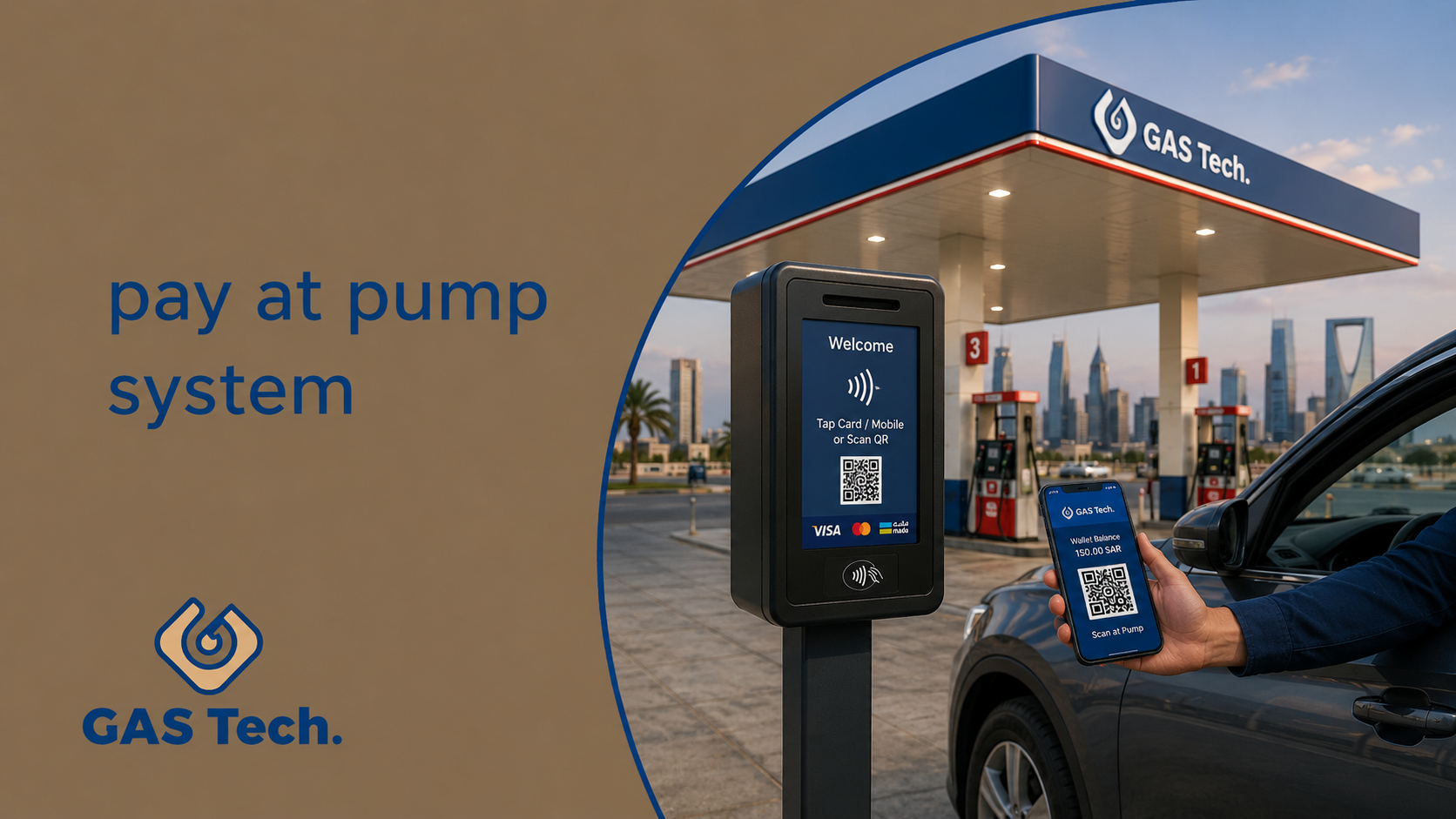
Pay at pump system at a modern fuel station, featuring an outdoor payment terminal, contactless NFC and QR code payment, and GasTech digital fuel payment technology.

Operating a modern forecourt comes with expanding commercial pressure. Rising energy prices, increasing staffing costs, compliance obligations, and financial leakages all place heavy pressure on margins. For station operators, factory logistics managers, and fleet owners, the goal is clear: reduce operational expenditure without sacrificing speed or customer experience.

Deploying an Outdoor Payment Terminal (OPT) or an integrated pay at pump system transforms traditional refueling into a seamless, automated process. By combining hardware reliability with smart digital infrastructure, solutions like GasTech allow operators to unlock continuous efficiency, streamline auditing, and eliminate common forecourt losses.

Why Forecourts Are Transitioning to a Pay at Pump System

Traditional fuel purchasing models require manual intervention at every step. A modern pay at pump system shifts this dynamic toward automated self-service, delivering immediate operational and financial benefits:

  • Elimination of Fuel Theft: Pre-payment mechanisms directly combat drive-offs and unpaid fuel, removing one of the largest financial drains on station operations.
  • Optimized Staffing Costs: Automation reduces reliance on manned POS units, especially during off-peak hours. This enables 24/7 operations without expanding employees.
  • Reduced Congestion: Direct payment at the pump eases indoor queues, leaving store space open for high-margin convenience shoppers.

Upgrade your forecourt efficiency and eliminate revenue leakage with GasTech’s end-to-end solutions. Contact our engineering team today to integrate an advanced pay at pump system tailored to your operational needs and fully compliant with Saudi regulatory standards.


Integration of the Fuel Dispenser Payment Terminal with Forecourt Controllers

At the core of every automated pump is the fuel dispenser payment terminal. This hardware interface acts as the secure bridge between the customer, the physical dispenser, and the station’s central management system.

When a driver selects a nozzle and initiates a purchase, the fuel dispenser payment terminal communicates directly with the forecourt controller. The system validates the authorized payment amount or fuel volume, commands the dispenser pump to start, and automatically cuts off fuel flow precisely when the pre-set limit is reached.

GasTech’s flexible architecture allows fuel stations to integrate these terminals through multiple site layouts:

  1. Side-Mounted Pump Screens: Dedicated payment displays directly built into each dispenser.
  2. Centralized Pay Pedestals: Single-stand terminals positioned beside multiple pumps to serve adjacent lanes.
  3. In-Store POS Terminals: Integrated supermarket systems where attendants input the pump and nozzle number to authorize exact prepaid dispensing.

Enhancing Customer Experience with an NFC Fuel Payment System

Modern drivers expect the same speed on the forecourt that they experience in daily retail transactions. Integrating an NFC fuel payment system ensures that fueling remains contactless, fast, and secure.

By supporting smart devices, mobile wallets, and contactless debit/credit cards, an NFC fuel payment system allows customers to authorize transactions within seconds. GasTech enhances this digital ecosystem through custom mobile application features:


  • Digital Wallet & QR Scanning: Customers charge their digital balance via a dedicated mobile app, generate a unique dynamic QR code, and scan it directly at the pump scanner.
  • Automated Dispensing Command: Once verified, the system sends an instant authorization command to the pump, dispensing fuel strictly up to the available balance before automatically shutting down.

Automated Invoicing and ZATCA Compliance via Central Synchronization

For fuel station operators in Saudi Arabia, operational efficiency must go hand-in-hand with regulatory compliance. Modern payment platforms do more than manage transactions; they automate financial auditing and tax reporting.

Our Cloud-based fuel station software connects directly to the pump hardware to deliver a fully integrated compliance loop:

  • Direct ZATCA Integration: The platform pulls volume and price data straight from the pump dispenser, automatically generating e-invoices that integrate directly with the Zakat, Tax and Customs Authority (ZATCA).
  • Automated Shift Closures: Opening and closing pump meter readings are captured digitally at every shift change, sending detailed reconciliation reports directly to the head office to eliminate manual auditing errors.
  • Offline Data Resilience: To prevent data loss during network interruptions, all transaction logs are saved locally on the station’s secure database and automatically synchronized with central servers the moment connectivity is restored.

End-to-End Enterprise Resource Planning (ERP) & Cloud Management

For operators managing multi-site networks across the Kingdom, central oversight is vital. GasTech connects every pay at pump system to our [Fuel station ERP system Saudi Arabia], a centralized, cloud-based platform.

This integration aggregates transactional data from every pump, POS terminal, and inventory gauge into a unified executive dashboard. Station owners can remotely monitor live sales, conduct automated shift closures, track employee performance, and manage HR and procurement from any location. Operating on a resilient cloud infrastructure that supports both online and offline modes, the system ensures zero data loss during network disruptions, empowering business leaders to make data-driven decisions that maximize profitability.

Conclusion

Adopting automated payment technology is far more than a temporary operational upgrade—it is a strategic investment in long-term commercial resilience. By unifying durable hardware, NFC fuel payment system capabilities, and automated back-office accounting, forecourt operators can streamline daily workflows, eliminate revenue leakage, and run safer, more profitable facilities built for the future of energy retail.

Partner with GasTech to transform your fuel stations with end-to-end automation and compliant payment solutions. Whether you are constructing a new site or upgrading an existing network, our engineering team delivers tailored, future-ready infrastructure aligned with regional regulatory standards.

Contact GasTech today to request a technical consultation and discover how our pay at pump systems can elevate your operational efficiency.